Major & Non-Major Port Operators
Port trusts and state maritime boards procuring terminal, administrative, and signage packages, generally through a tendered process against their own construction specifications.
General Contracting
Terminal and administrative building interiors, wayfinding and safety signage, customs and crew facilities, and logistics hub fit-outs, executed by one in-house team and specified for continuous salt exposure.
Last updated: 4 August 2026
In Short
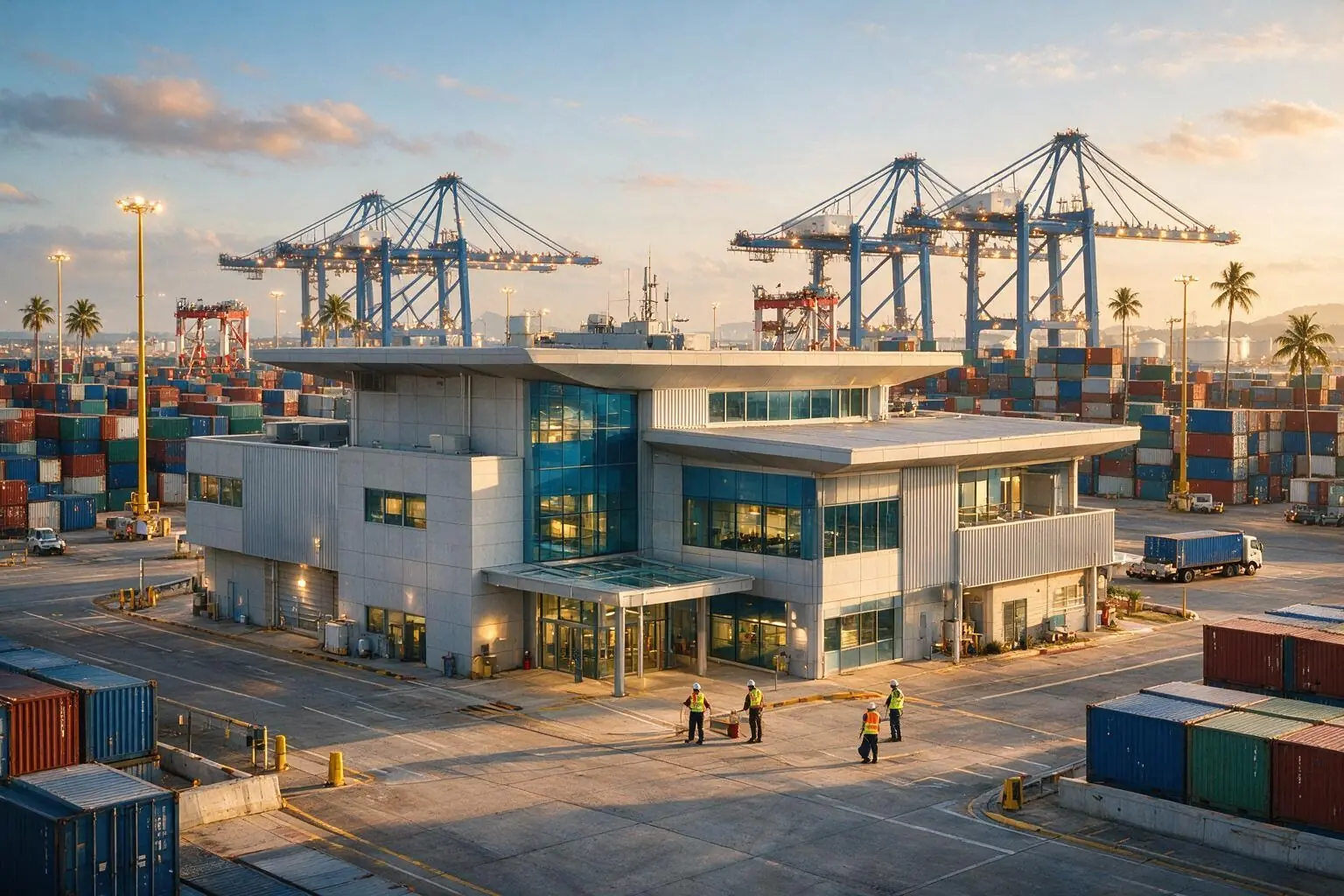
Port work differs from an inland fit-out in two ways: salt-laden air attacks the specification, and access is controlled by the port authority. Impulse Branding Solutions delivers terminal and administrative interiors, wayfinding and mandatory safety signage, customs, immigration and crew facilities, control buildings and warehouse offices, with civil, MEP, joinery and signage under one project lead.
Most fit-out failures at ports are corrosion failures, and they surface eighteen months after handover rather than at snagging. A mild-steel fixing that would last a decade in Pune is weeping rust within two monsoons at a coastal terminal, and a signage panel fixed with the wrong fastener will stain the facade it is mounted on long before the panel itself fails. IBS treats material specification at a port as an engineering decision made at the drawing stage. Fixing metallurgy, coating system, and edge detailing are chosen against the exposure rather than selected to hit a rate. The second constraint is operational. Port facilities run to cargo and vessel schedules, gate access is controlled, and an area open to work one week may be under active operations the next. Civil, MEP, joinery, and signage are held by one project lead, so a sequencing change imposed by the port does not become a dispute between four contractors.

What We Make
Maritime transport handles about 95% of India's trade by volume and 70% by value, and major port capacity has nearly doubled from 873 MMTPA in 2014 to 1,726 MMTPA in 2026 (PIB, 2026). Capacity added at that scale brings terminal buildings, administrative blocks, and logistics facilities with it, all of which need fitting out to a coastal specification. Below is what each category covers.
General Contracting · Type 01
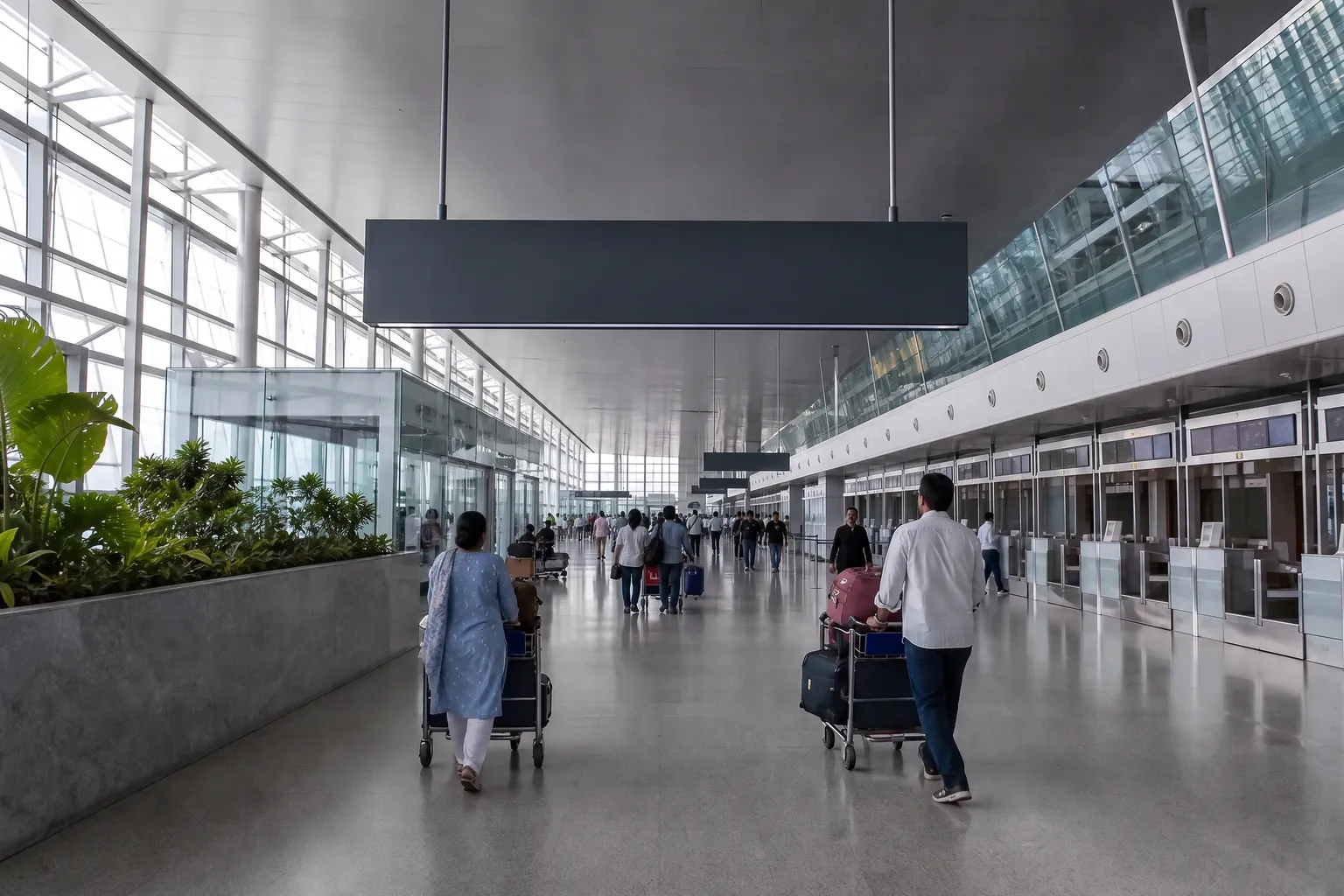
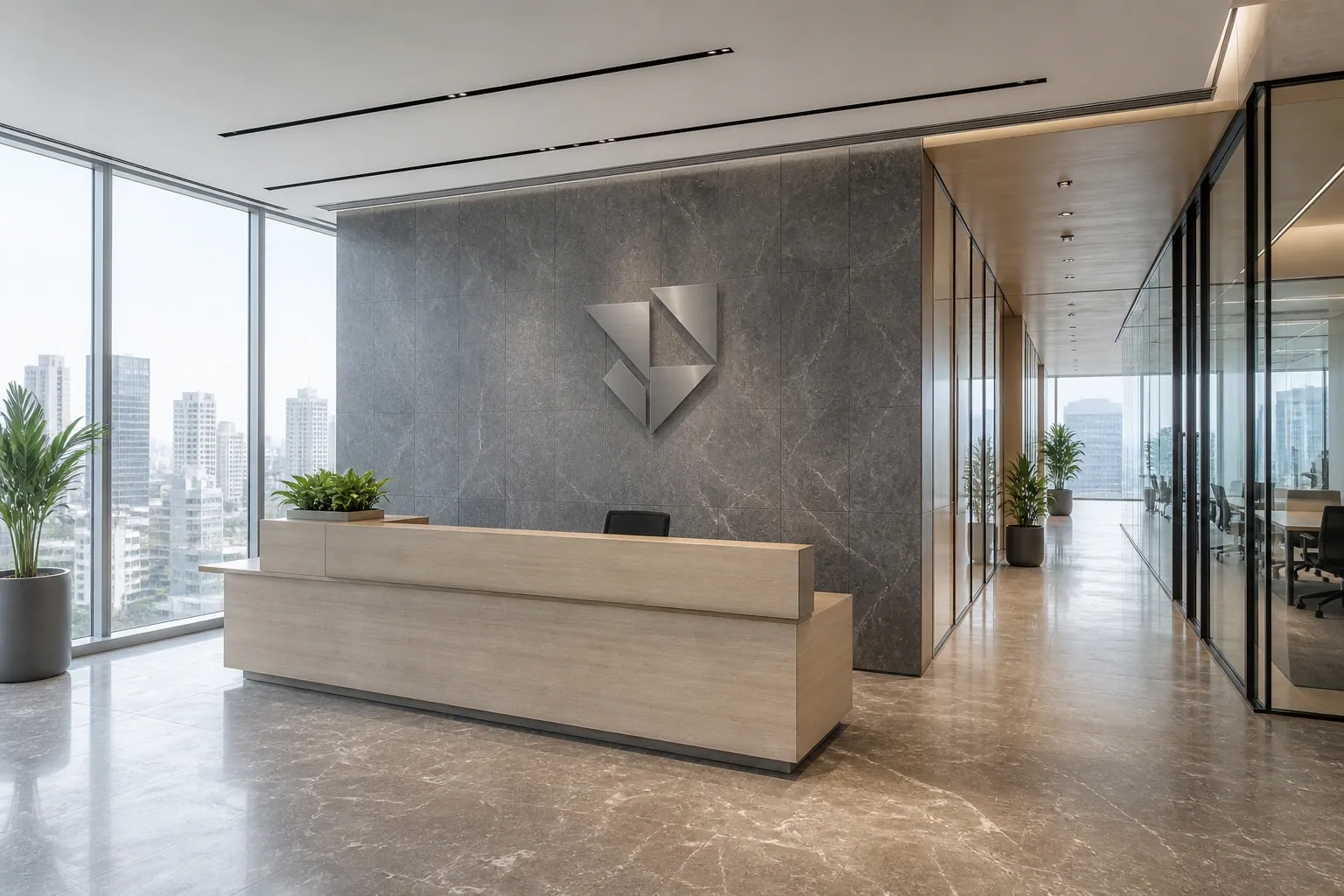
Interior fit-out of terminal and passenger buildings, including circulation areas, waiting halls, and public-facing counters, specified for heavy footfall in a coastal atmosphere.
General Contracting · Type 02
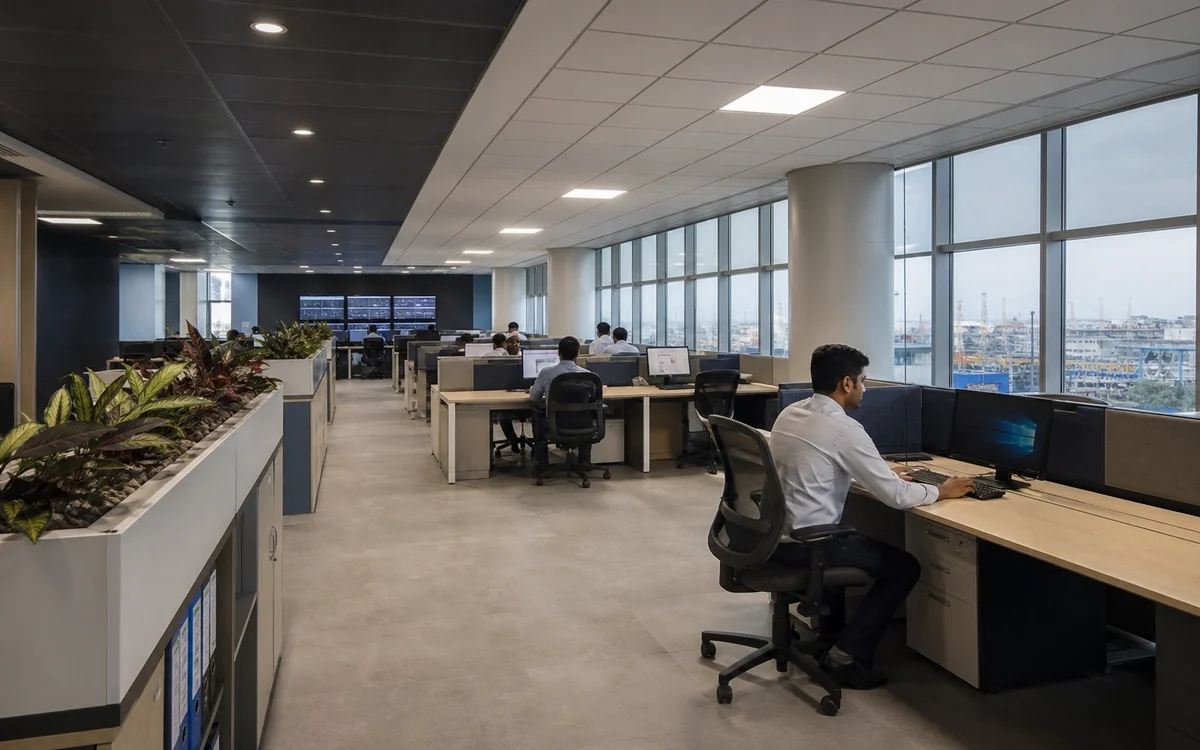
Office, control room, and operations building fit-outs inside the port estate, where the work is conventional but the environment and the access regime are not.
General Contracting · Type 03
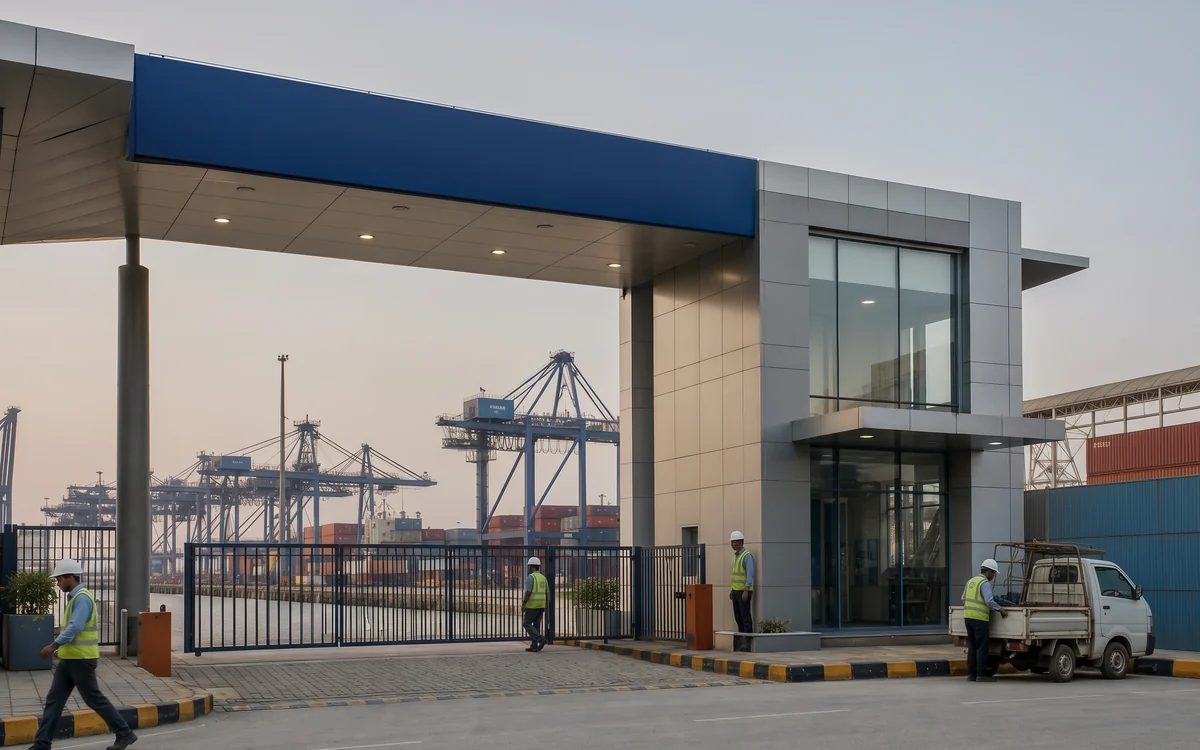
Directional, identification, and statutory safety signage produced as one system, in substrates and finishes chosen to survive continuous salt exposure rather than to match an inland specification.

General Contracting · Type 04
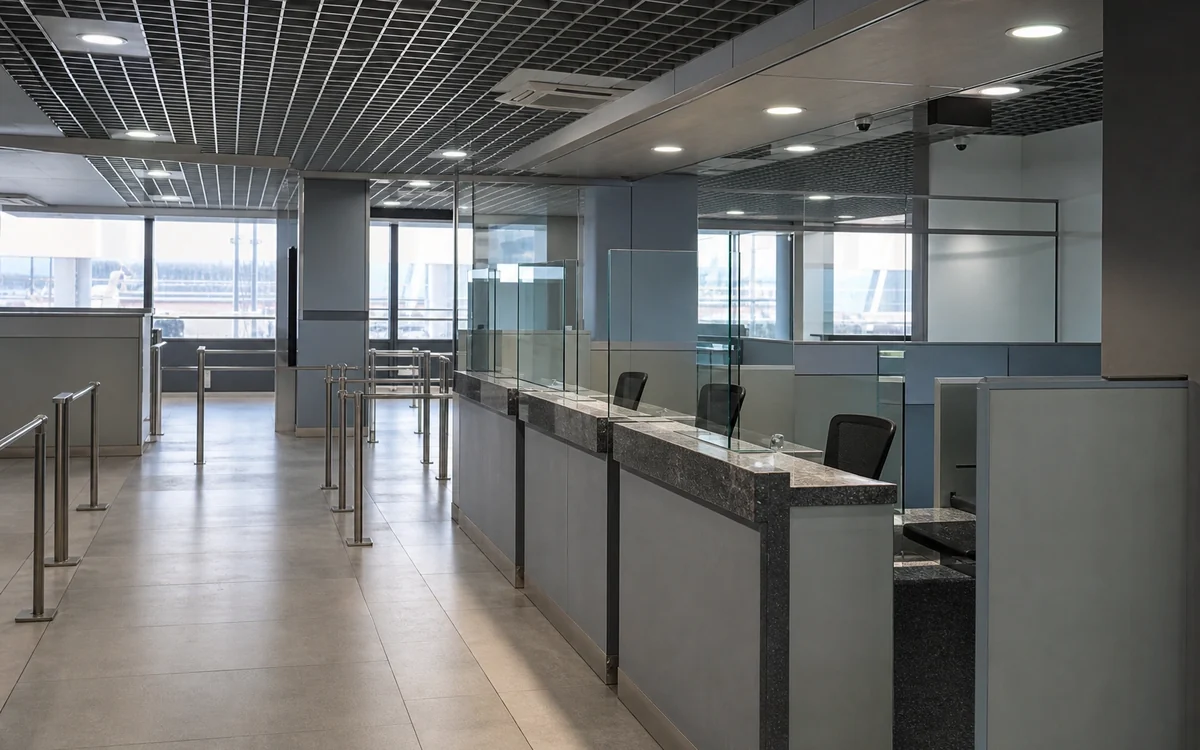
Fit-out of regulated processing areas and crew welfare facilities, where the layout is set by the process the space has to support rather than by a general office standard.
General Contracting · Type 05
Office and amenity fit-outs inside logistics hubs, container freight stations, and warehouse facilities, delivered around active handling operations.
General Contracting · Type 06
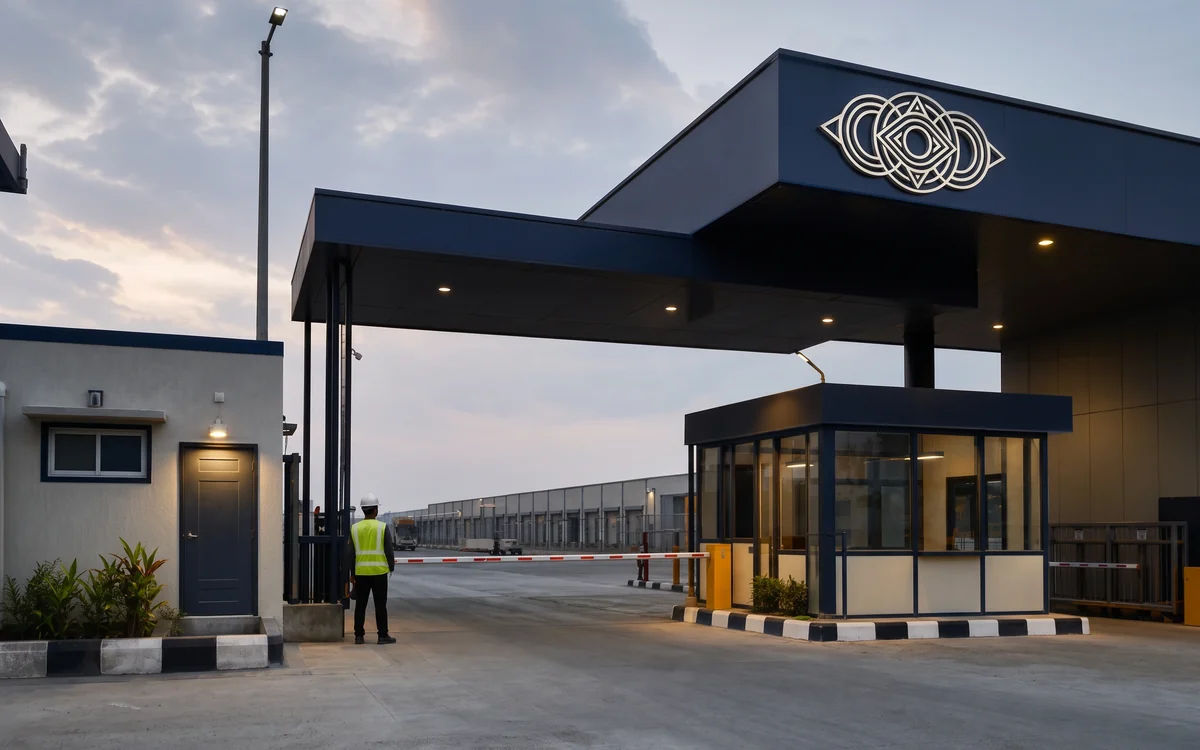
Smaller structures at the port perimeter and within the estate, where the exposure is highest and the specification matters most.
Specification
Port work is governed by two things a commercial fit-out is not: a marine atmosphere that attacks the assembly continuously, and a regulated facility with a controlled access regime. These are the criteria that anchor an IBS port package.
Ready when you are
Share the site, the scope and the date you need it working. We quote against a BOQ with every component itemised, and the first site visit carries no charge.
How We Deliver
A port package runs against the operator's schedule rather than the contractor's, and the specification work happens earlier than it would on an inland job. These are the stages IBS works through.
Measured survey combined with an assessment of exposure by area, because a gatehouse at the perimeter and an interior office in an administrative block need materially different specifications despite being on the same site.
Good For Construction drawings developed against the port operator's own requirements, with the fixing, coating, and substrate specification agreed explicitly rather than left as a supplier's choice.
Worker documentation, gate passes, and any escort requirements filed against a dated programme, since an unapproved crew at the gate costs a full working day.
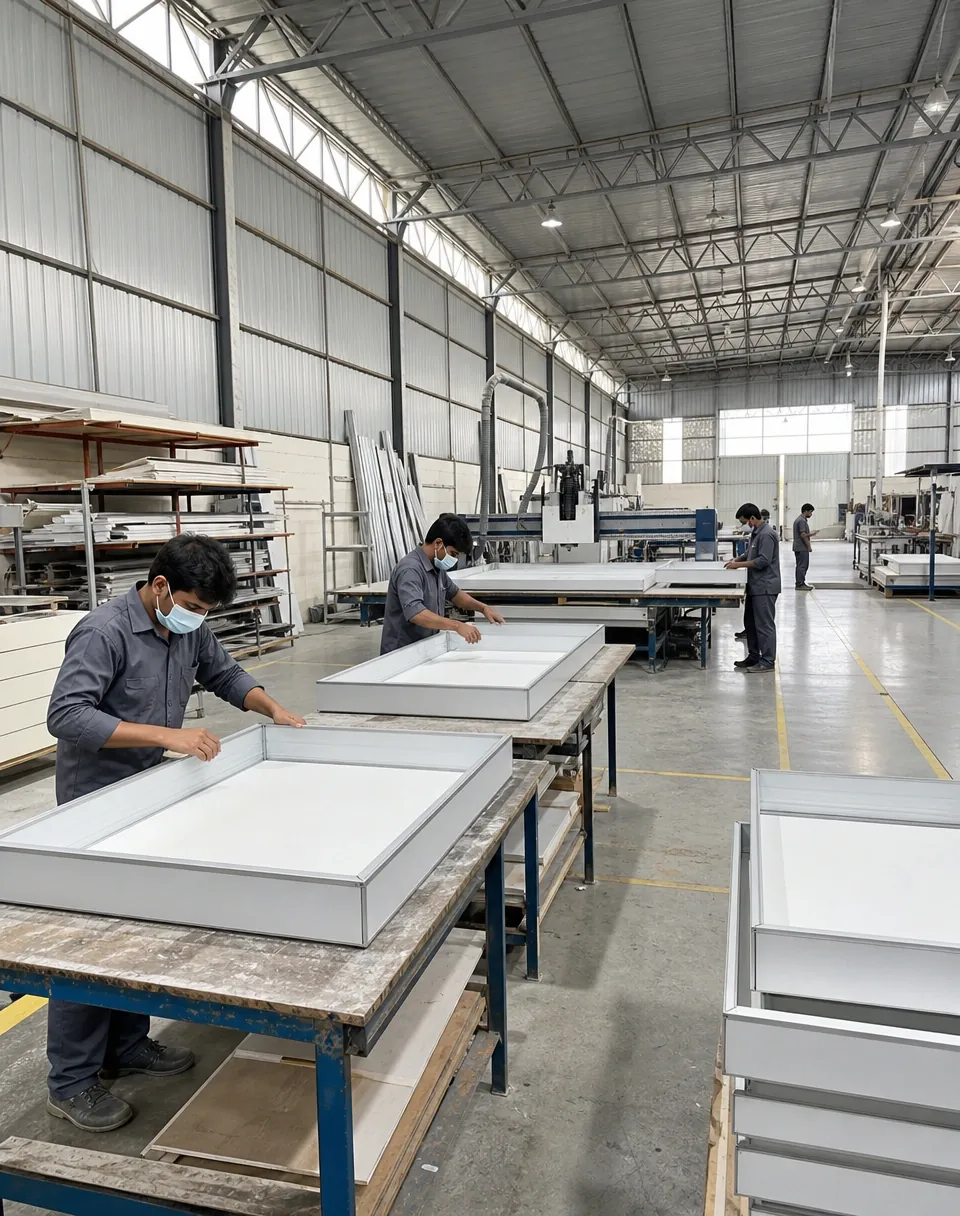
Signage, counters, and joinery manufactured at the Mumbai facility and the Vasai East furniture factory, with the specified fixing pack supplied as part of the same delivery rather than sourced locally at installation.
Material delivered against the released work areas, with barricading and segregation from vehicle, forklift, and crane movement established before work starts in each zone.
MEP systems tested and commissioned, and installation snagging closed with particular attention to fixing points and edge sealing, which are where a coastal installation fails first.
Material specifications, coating and fixing details, test certificates, and as-built records compiled for the operator's handover file.
Why Buyers Choose IBS
Port fit-out work is judged on two things: whether the assembly survives the environment, and whether the contractor can work inside the operator's constraints without becoming a scheduling problem. These are the parts of the IBS model that decide both.
Fixing metallurgy, coating system, and edge detailing are chosen at drawing stage against the exposure, not selected to hit a rate. Most port fit-out failures are corrosion failures that appear eighteen months after handover, and almost all of them trace to a concealed fixing or a dissimilar-metal junction that was never specified properly.
Signage, counters, and joinery are fabricated at the IBS Mumbai facility and the Vasai East furniture factory, which is what makes a coastal specification enforceable. When fabrication is bought in, the fixing pack is the first thing substituted, and it is the component that decides how long the installation lasts.
Port operators release and withdraw working areas around vessel and cargo schedules. When that happens, a single project lead resequences the work. Four separate contractors each reprice it.
Worker documentation, gate passes, and escort arrangements are prepared and tracked by IBS against the operator's regime rather than handed back to the client. The same administrative discipline IBS applies to AVSEC pass management on airport projects applies here.
India's coastline carries major and non-major ports across several states, and appointing a different local fabricator at each one is how a specification drifts. IBS produces centrally in Mumbai and installs locally, so the fixing pack and coating system are identical at every site.
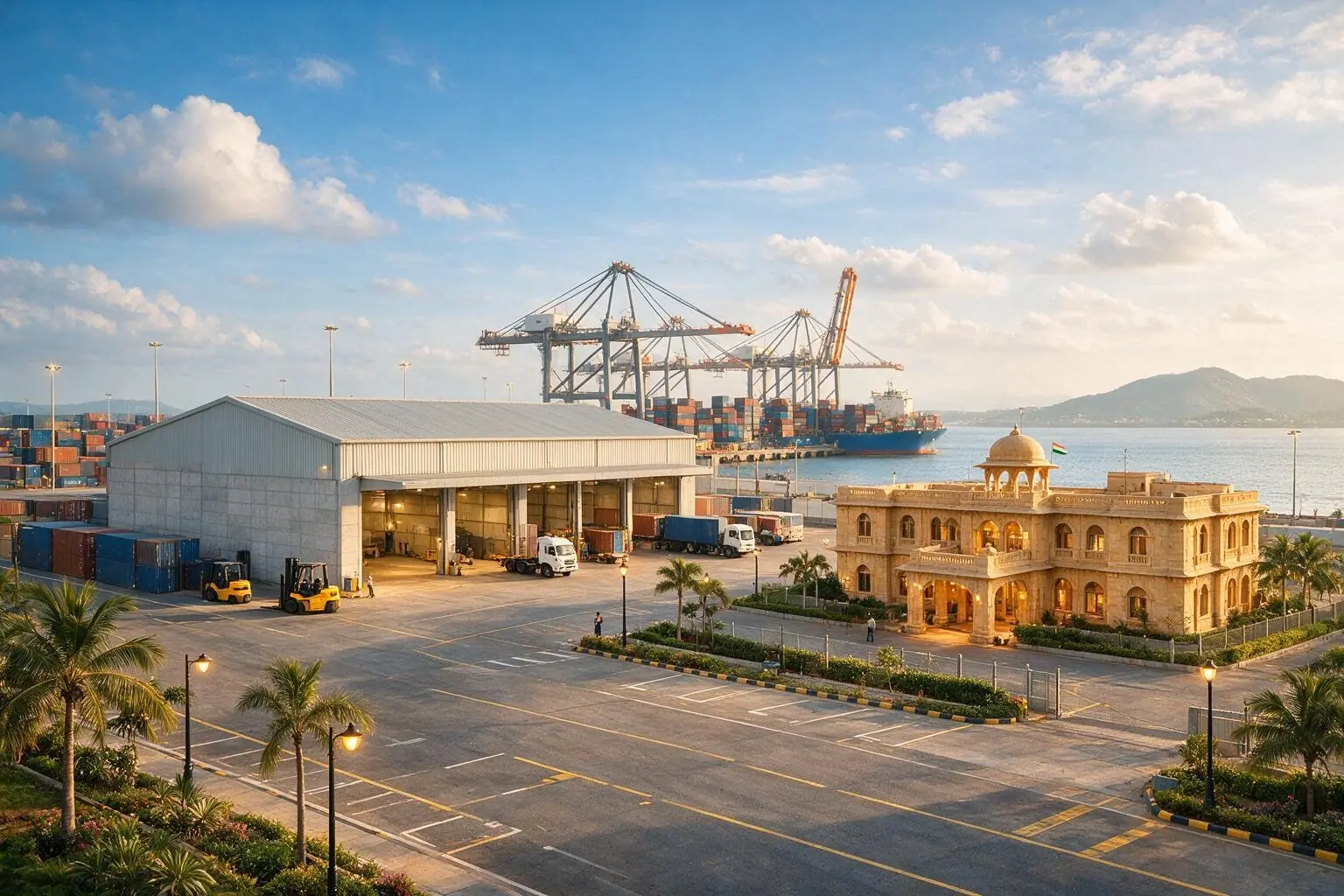
Port packages are commonly split across a civil contractor, an MEP vendor, and a signage supplier, none of whom owns the material specification that decides how long the installation survives. Here is how that compares with the scope IBS runs in-house.
| Typical Multi-Vendor Approach | IBS Integrated Approach | |
|---|---|---|
| Fixings and fasteners | Standard mild-steel hardware supplied as part of a generic fixing pack, corroding within two monsoons | Stainless or hot-dip galvanised hardware specified at every fixing point, including concealed fixings |
| Coating and finish selection | Inland finish specification carried over unchanged to a coastal site | Coating systems selected against coastal exposure, with edge sealing where a substrate core would be open to salt |
| Dissimilar metal junctions | Left to the installer on site, producing galvanic corrosion that reads as poor workmanship | Junctions detailed at drawing stage to avoid dissimilar-metal contact |
| When the operator withdraws an area | Each contractor reprices the disruption, and the client arbitrates between them | One project lead resequences the work across all four disciplines |
| Gate passes and worker access | Left with the client to arrange per contractor, per shift | Worker documentation, gate passes, and escort arrangements prepared and tracked by IBS |
| Consistency across multiple ports | A different local fabricator at each port, so the specification drifts site to site | Produced centrally in Mumbai and installed locally, so the fixing pack and coating system are identical everywhere |
Sectors We Serve
Cargo handled at India's major ports rose from 581 MMT to 915 MMT while average vessel turnaround time fell from 94 hours to 48.8 hours (PIB, 2026). Throughput gains of that order are followed by investment in the buildings that support them. Port and maritime fit-out work reaches several distinct client types, each procuring differently.
Port trusts and state maritime boards procuring terminal, administrative, and signage packages, generally through a tendered process against their own construction specifications.
Container, bulk, and liquid terminal operators running facilities within a larger port estate, with their own brand standards to apply alongside the port's requirements.
See aviation projects
Logistics hubs, container freight stations, and inland container depots needing office, amenity, and signage fit-outs delivered around active handling operations.
Shipping line offices and agency premises within or adjacent to the port estate, fitted out to a corporate brand standard in a coastal setting.
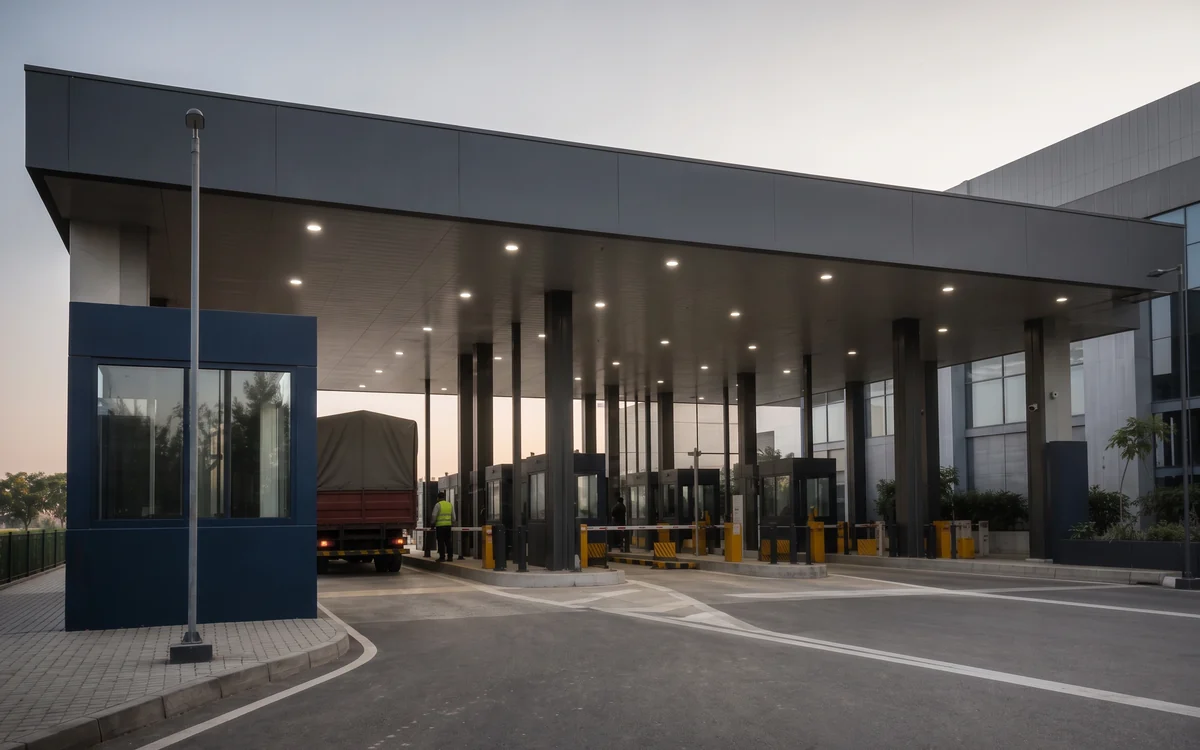
Processing halls, counters, and secure areas for customs, immigration, and allied agencies, where layout follows the clearance process.
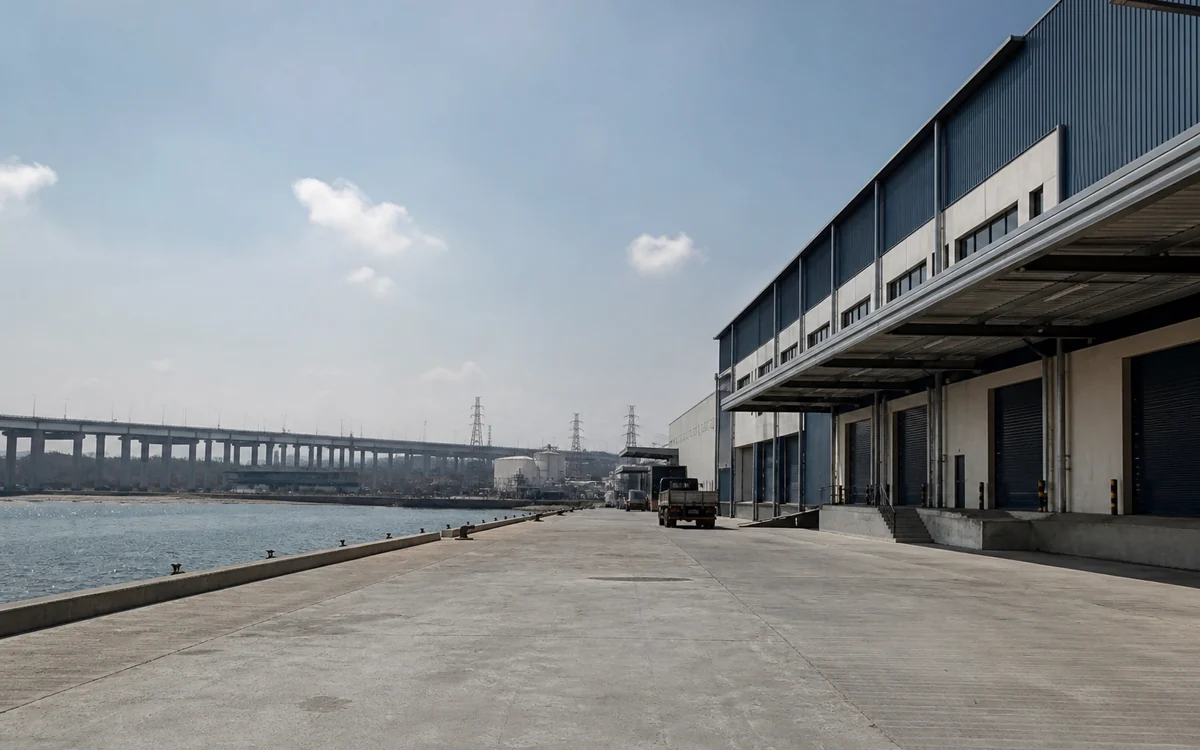
Warehousing and light industrial facilities along the coast that face the same salinity exposure as the port itself without necessarily sitting inside the port estate.
Commercials
Port packages are quoted against a measured survey, an exposure assessment, and the operator's access regime. IBS does not publish per-square-foot rates for port work, because two areas of identical size on the same site can carry very different specifications depending on exposure and on how the operator releases access.
A measured survey with an exposure assessment by area, GFC drawings developed against the operator's construction requirements, an explicit fixing, coating, and substrate specification, off-site fabrication, staged delivery and installation, testing and commissioning of the MEP scope, and the handover documentation file.
Exposure by area and the coating and fixing specification that follows from it, whether work areas are released continuously or around cargo operations, the extent of MEP alteration, and whether signage covers a single terminal or several ports to one standard.
Port authority approval fees and statutory charges, marine and berth works, dredging, cranes and cargo-handling equipment, and any works to the quay structure itself, which remain with the operator's specialist marine contractors.
| Discipline | Term |
|---|---|
| Civil and joinery works | typically twelve months from handover for workmanship |
| MEP installation | typically twelve months from handover for workmanship, with equipment covered by the manufacturer's own term |
| Signage fabrication and coating | typically twelve months from installation for fabrication and finish |
| Named components | manufacturer warranty passed through on specified fixings, coatings, and illumination components |
| Stage | Terms |
|---|---|
| Advance against Purchase Order | Mobilises material procurement, including the specified fixing pack and coating systems. |
| On completion of off-site fabrication | Payable when signage, counters, and joinery are manufactured and dry-fitted, before dispatch. |
| Against installed areas | Billed progressively against completed and accepted work areas rather than against calendar milestones, since access governs the programme. |
| On handover and documentation | Released on snag-list closure and submission of the as-built, specification, and certification file. |
A measured survey with an exposure assessment is carried out before quotation on any port project. Exposure varies substantially across a single port estate, and quoting one specification across all of it either over-specifies the interior areas or under-specifies the perimeter, which is the more expensive of the two mistakes.
Share the facility, the areas in scope, and the operator's access regime, and IBS will respond with a scoped proposal.
Questions
These are the questions port operators, terminal operators, and logistics clients most often raise when scoping a fit-out or signage package.
The Company
Impulse Branding Solutions is a Mumbai-headquartered, vertically integrated commercial branding and fit-out execution company with over fifteen years of operating history. We deliver across two service lines under one roof: print branding and signage, including ACP cladding, LED sign boards, glow signs, channel letters, vehicle wraps and exhibition fabrication, and commercial interior fit-outs covering civil, MEP, false ceiling, joinery and turnkey contracting.
Our in-house manufacturing facility, in-house civil and engineering team and in-house furniture factory near Vasai East mean every project, from a single signage installation to a multi-Crore fit-out, runs through one team with single-point accountability. Approved vendor with Adani Airports, HSBC, Reliance Retail, HDFC ERGO, Godrej Finance, EPSON and Duravit. BCAS-cleared for airport work. Pan-India delivery at a single execution pace.
Read more about IBSTrack Record
A senior, in-house project team
Civil, MEP, and joinery leads supporting enterprise fit-out and branding projects across India.
“Every project runs under one accountable team, from site survey to final handover.”
Company-level BCAS security clearance for airport projects; site access arranged per assignment
Approved vendor with
Adani Airports · HDFC ERGO · Reliance Retail · Godrej Finance · EPSON · Duravit · HSBC
Past clients
Accessorize · Adani Airports · Aditya Birla Retail · Duravit · EPSON · Godrej Finance · HDFC ERGO · HSBC · Reliance Retail · Sagility · Society Tea
Related Capabilities
Port packages usually draw on adjacent IBS service lines, particularly the MEP works behind the building services, the signage manufacturing behind wayfinding, and the airport work that shares the same controlled-access discipline.
In-house mechanical, electrical, and plumbing execution for commercial buildings, fit-outs, and new construction. HVAC, firefighting, UPS, DG sets, plumbing systems.
View DetailsBCAS-cleared for airside and landside airport construction, retail fit-outs, signage, and branding inside active airport terminals. Executed for Adani Airports.
View DetailsComplete turnkey interior fit-outs from bare shell to move-in ready. Civil, MEP, carpentry, false ceiling, flooring, partition systems, and brand environment.
View DetailsAny branding product that doesn't fit a standard category. We design and fabricate custom structures, display units, 3D installations, and brand identity pieces.
View DetailsFurther reading
References
Ready to Start?
Share the facility, the areas in scope, and the operator's access regime. IBS will respond with a scoped proposal and a specification matched to the exposure.
Request a site surveyTell us about your port & large infrastructure fit-outs requirement.