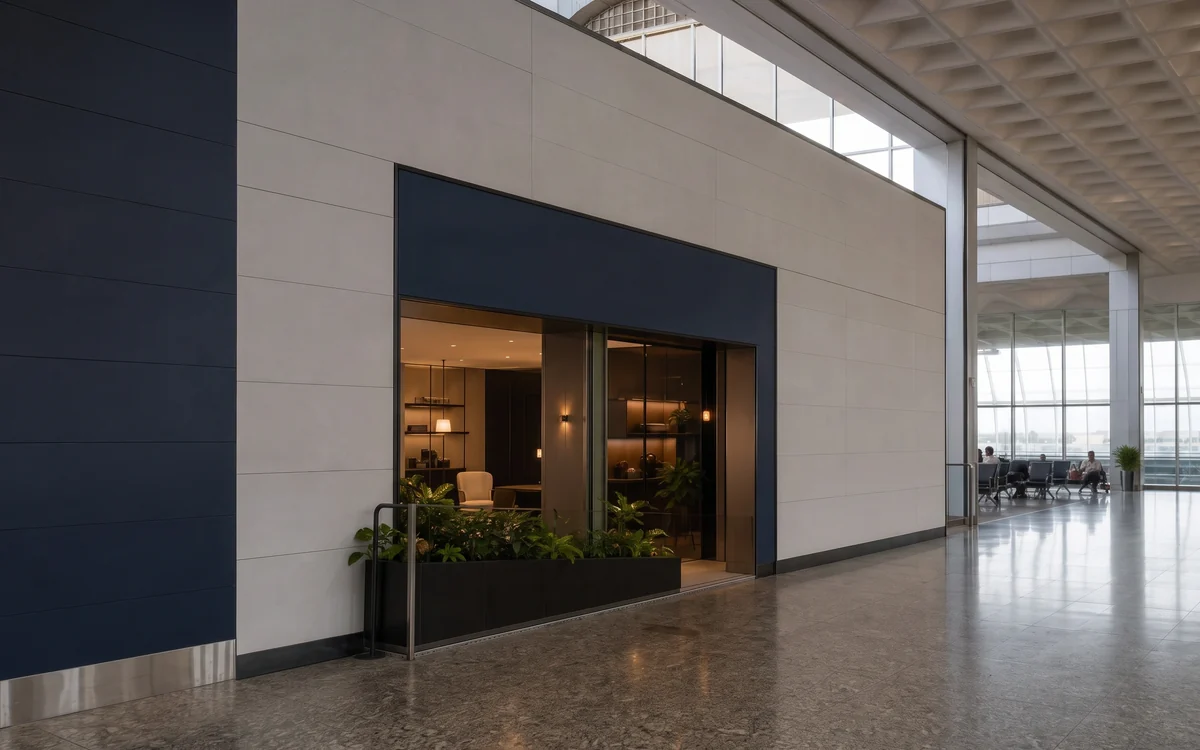
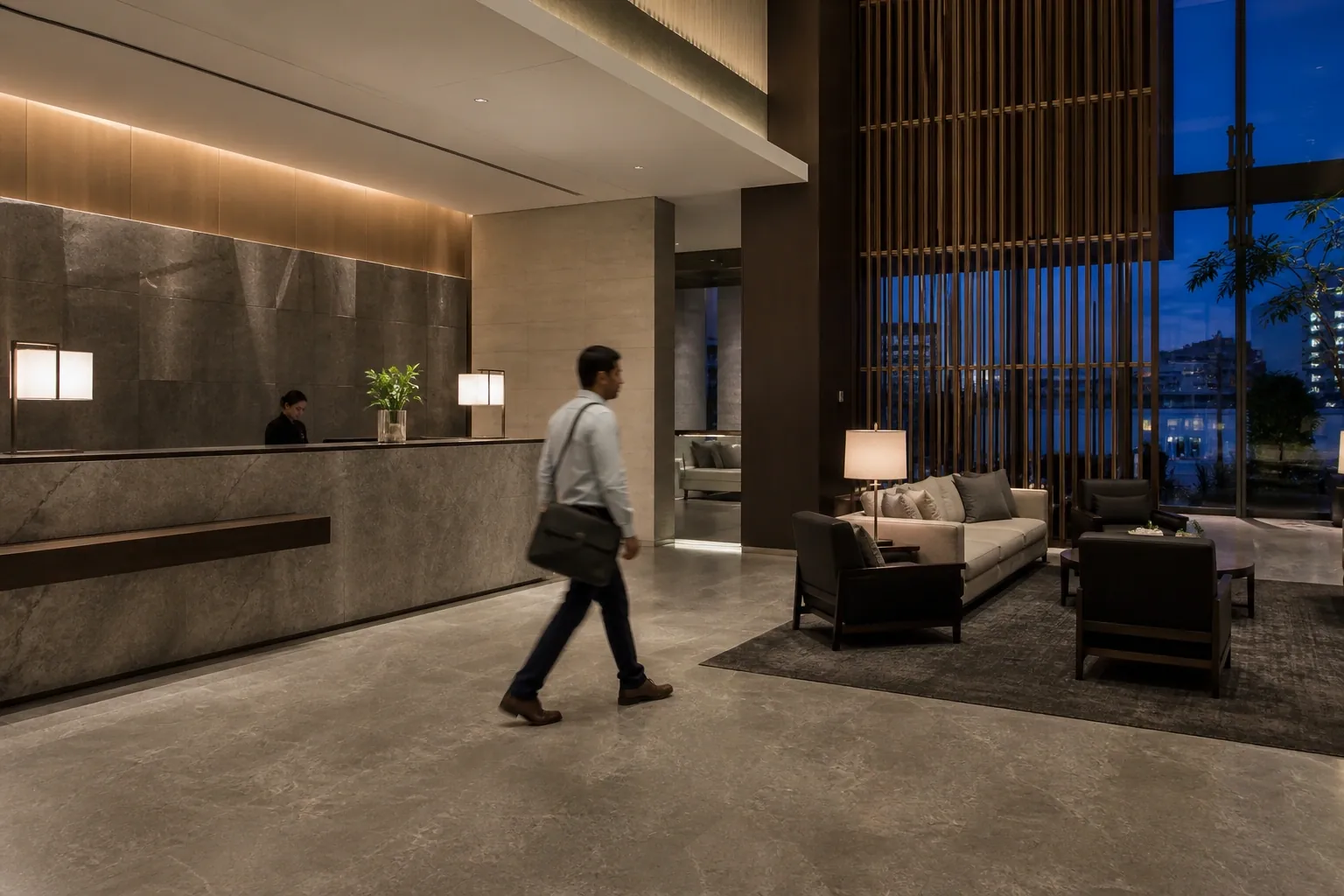
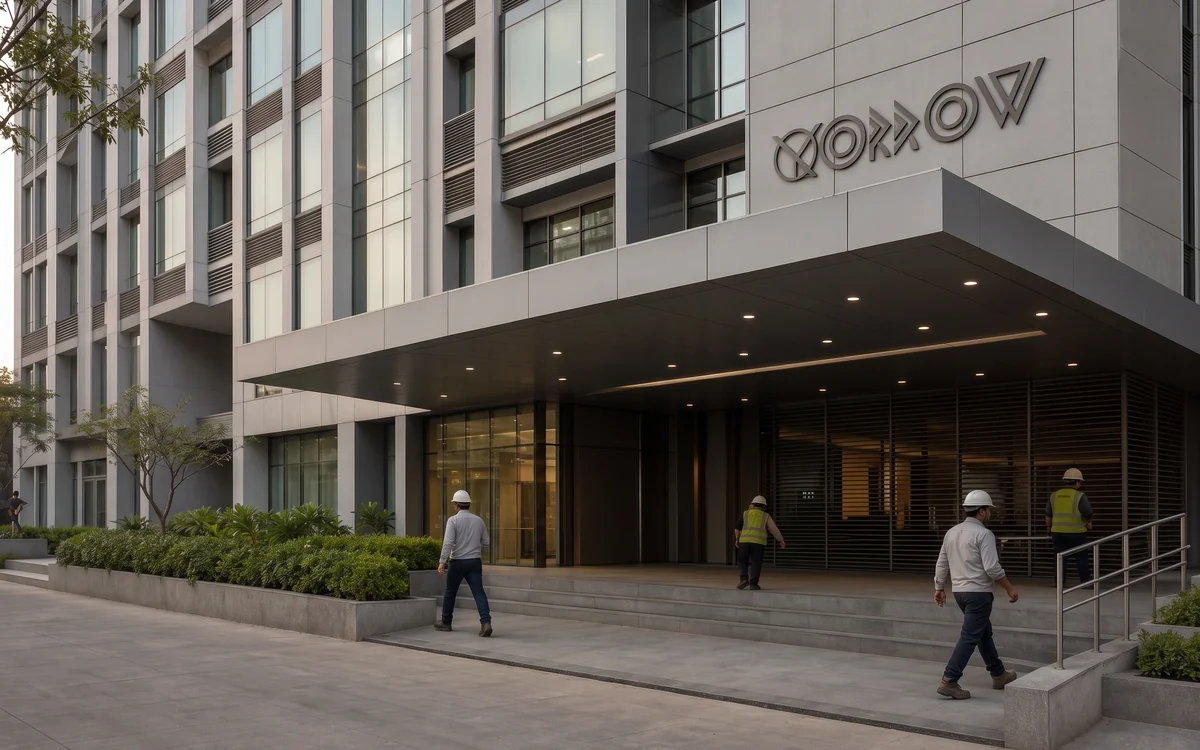
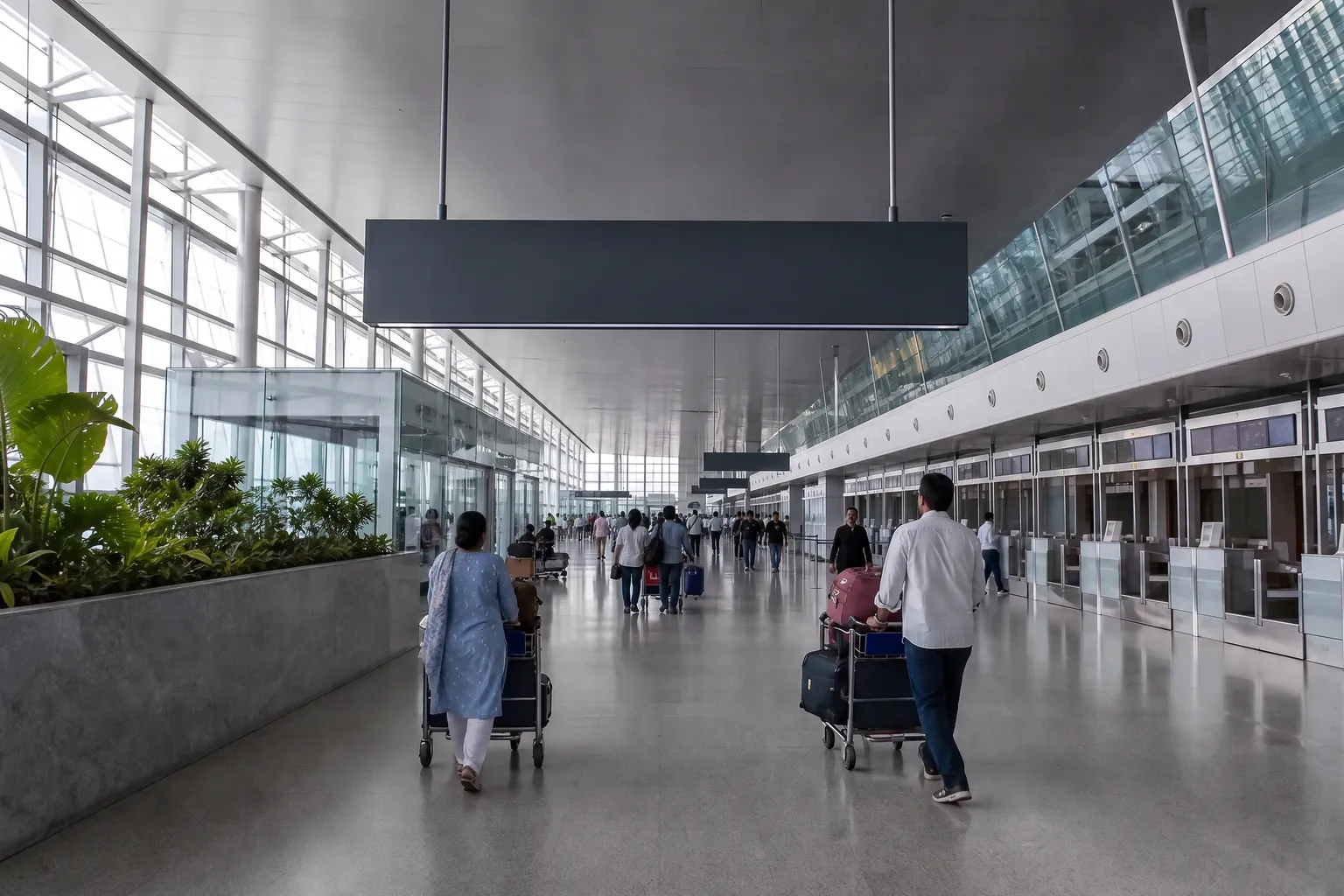
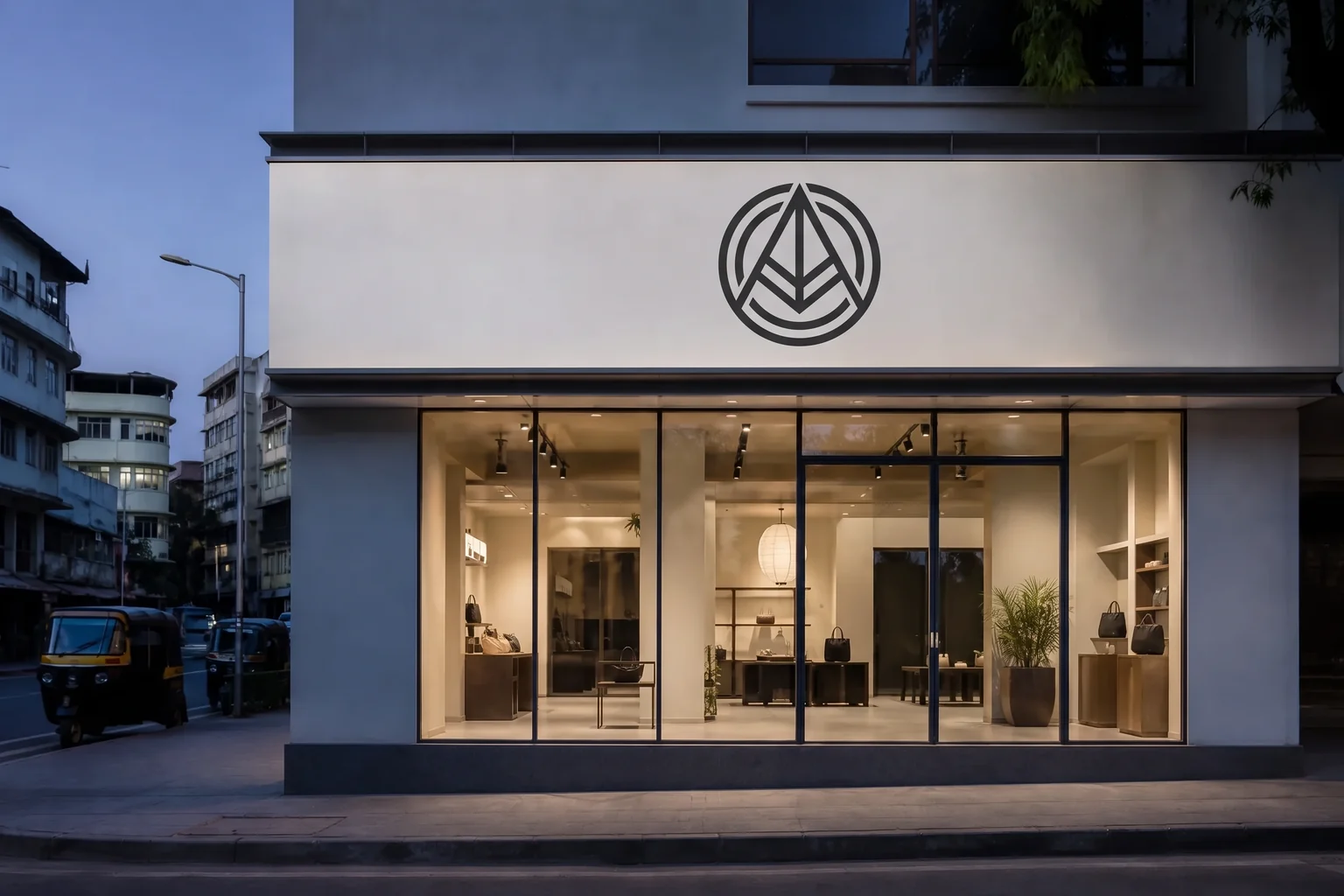
Lucknow Airport Duty Free Area
BCAS-cleared end-to-end execution including ACP cladding within the airport terminal duty-free zone — civil works, ACP cladding, signage and finishing integrated under one project manager
View case study →Service Line 01
Print BrandingService Line 02
General ContractingLast updated: 26 May 2026
Print Branding & Signage
End-to-end aluminium composite panel (ACP) cladding for corporate facades, BFSI branches, retail showrooms and airport lounges. In-house fabrication and civil execution. Pan-India.
Fifteen years of executing ACP cladding for enterprise, retail and aviation clients across India — single-team delivery, in-house civil and engineering, BCAS-cleared for airport work.
Impulse Branding Solutions delivers end-to-end ACP cladding services across India — from site survey and design through fabrication, substructure execution and installation. Pan-India delivery at one pace, with no subcontracted substructure work. Approved vendor with HSBC, Reliance Retail, Adani Airports, EPSON, Duravit and HDFC ERGO.
Product Range
ACP cladding is rarely deployed in a single uniform way across an enterprise project. A facade typically integrates with fascia signage, column cladding, soffit treatment and internal branding — each with different fabrication tolerances, substructure detailing and visual continuity requirements. IBS undertakes the full application range below as part of the same project, under one project manager, to a single visual specification.
Exterior Facade Cladding
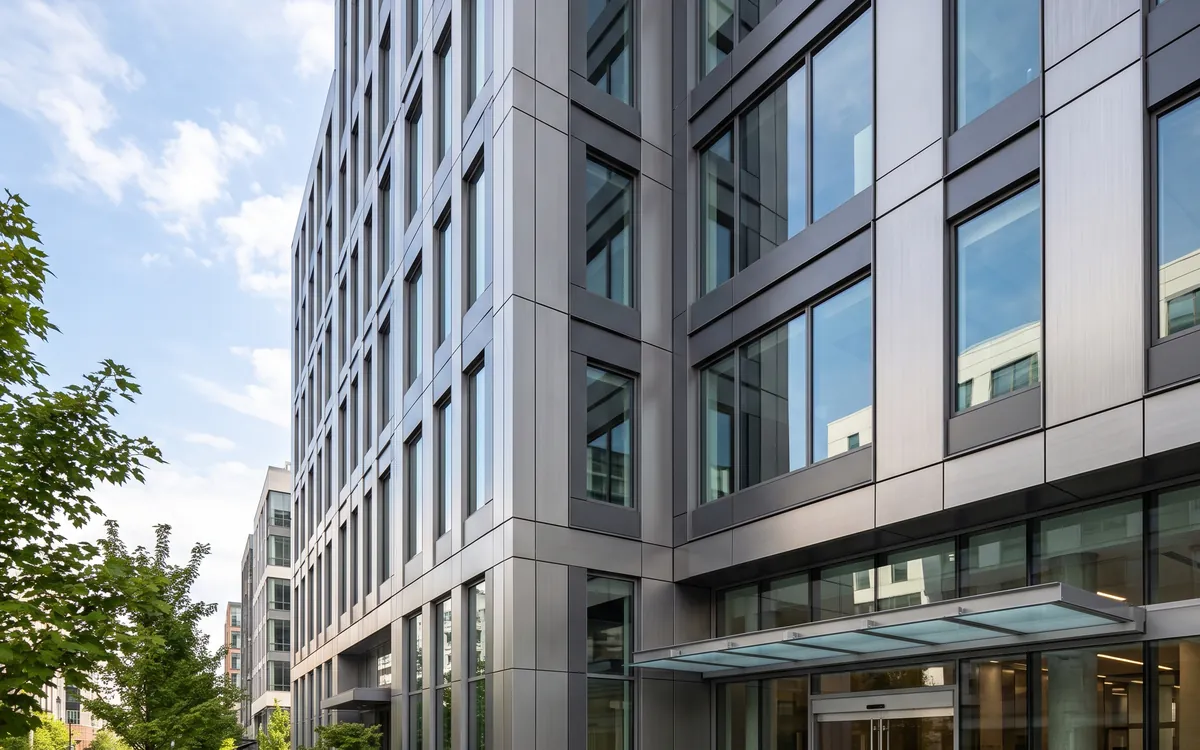
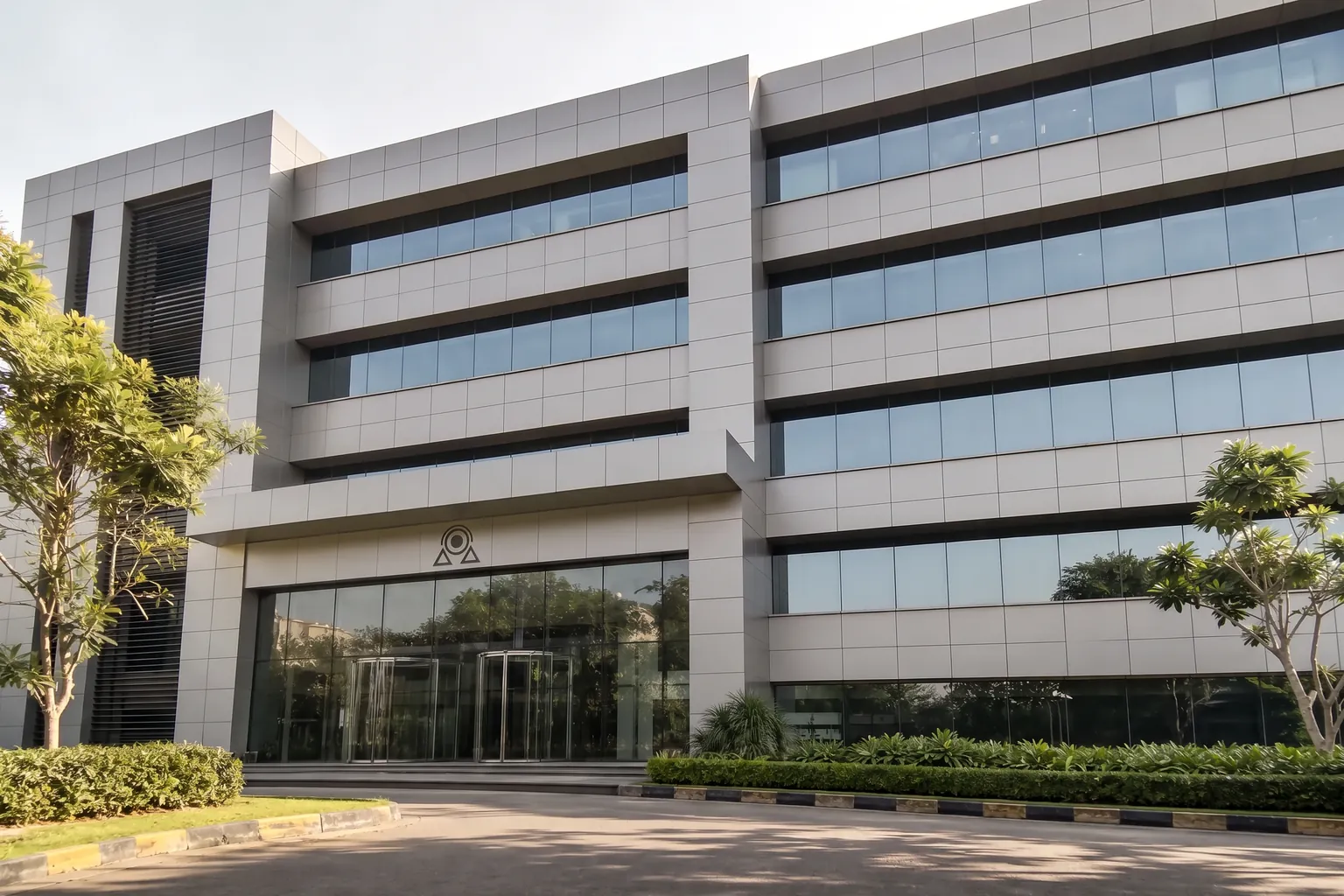
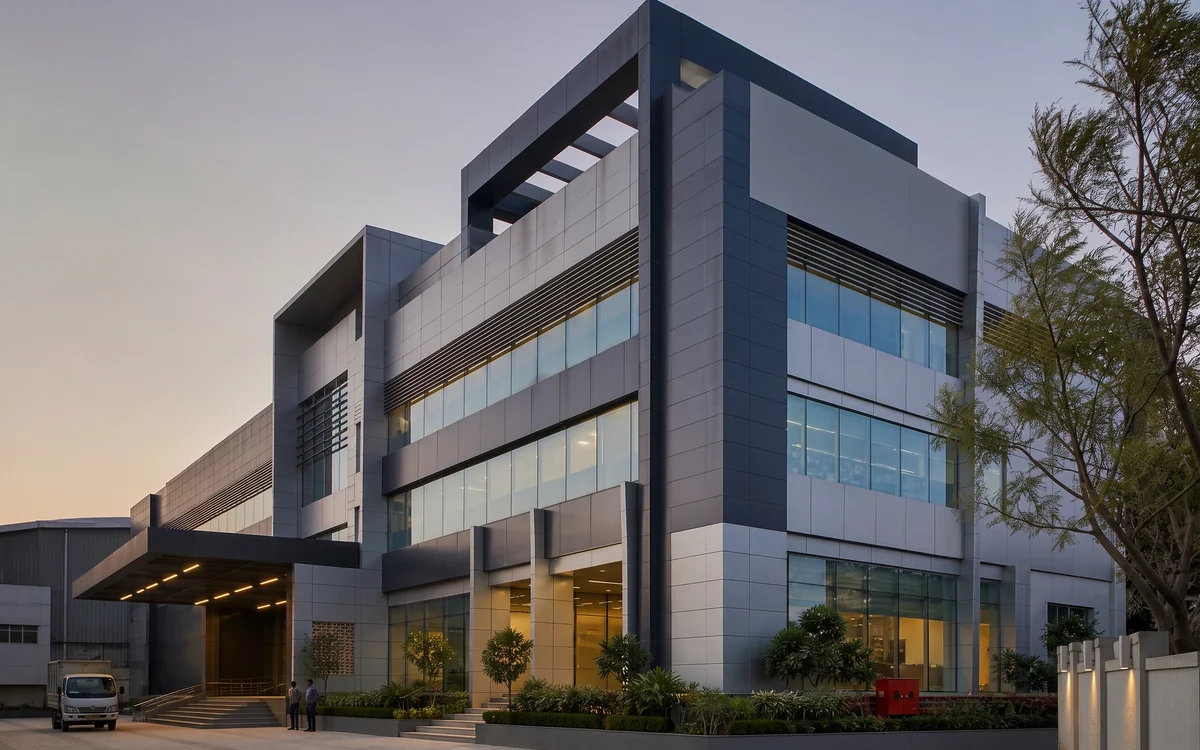
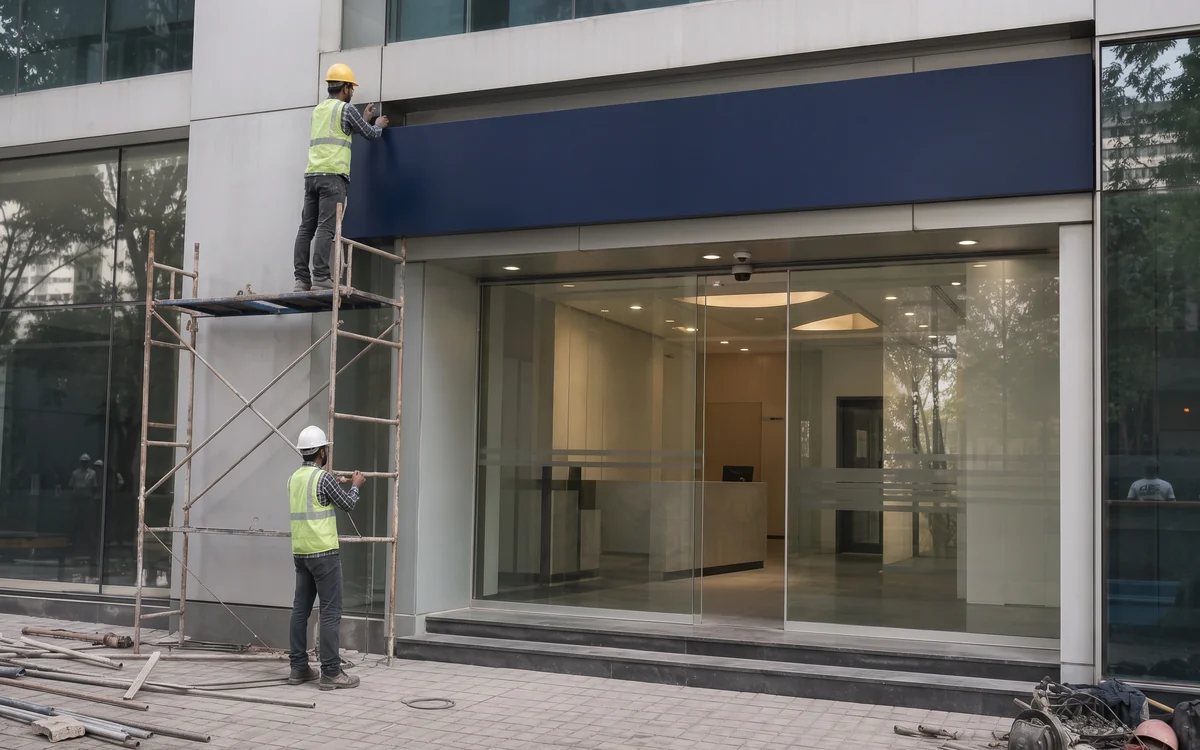
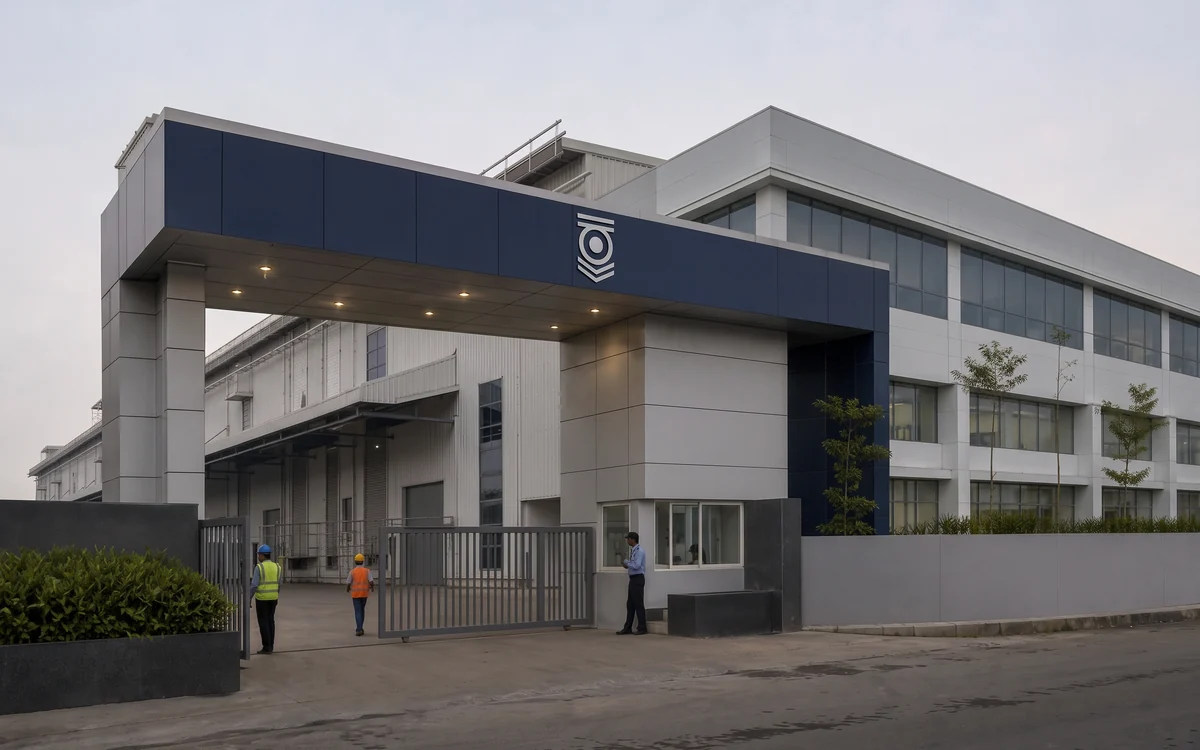
Full-building or wing facades, including curtain-wall-style ACP applications for corporate offices, BFSI branches and manufacturing facilities. We engineer the substructure to the facade's wind loading, thermal expansion and seismic requirements per the National Building Code. Suitable for ground-up new builds and retrofits over existing masonry or framed structures.
Fascia & Building Signage Backing
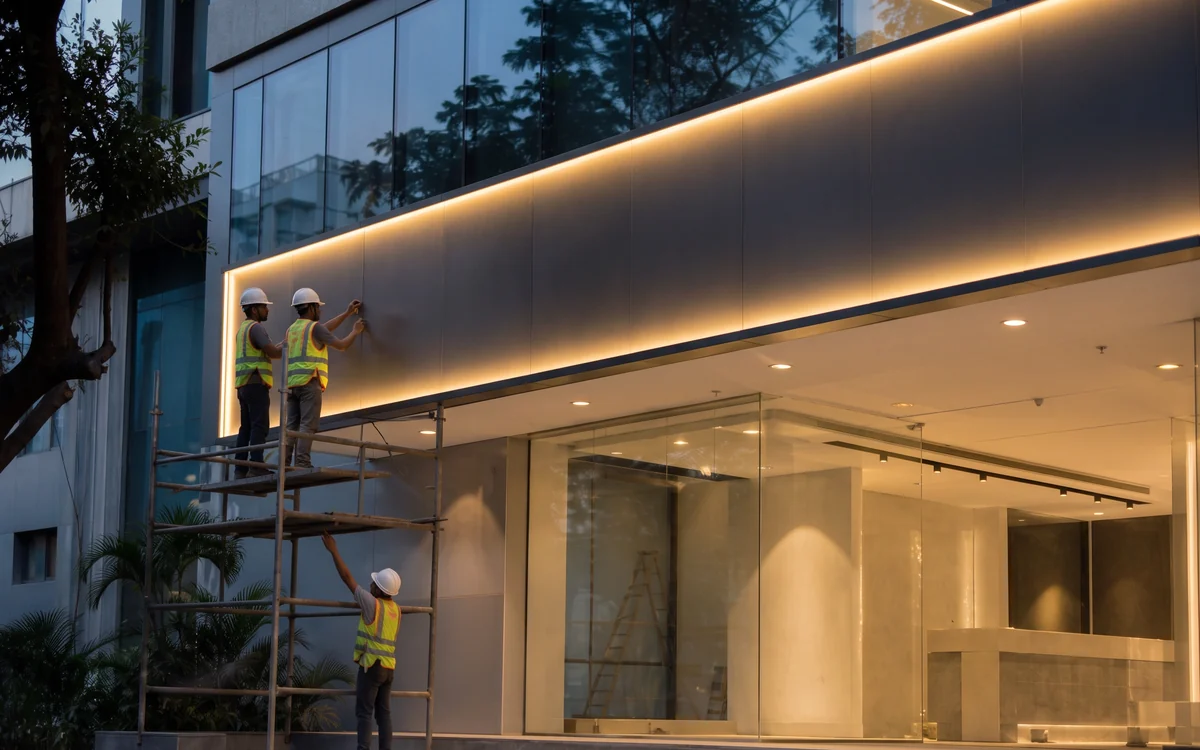
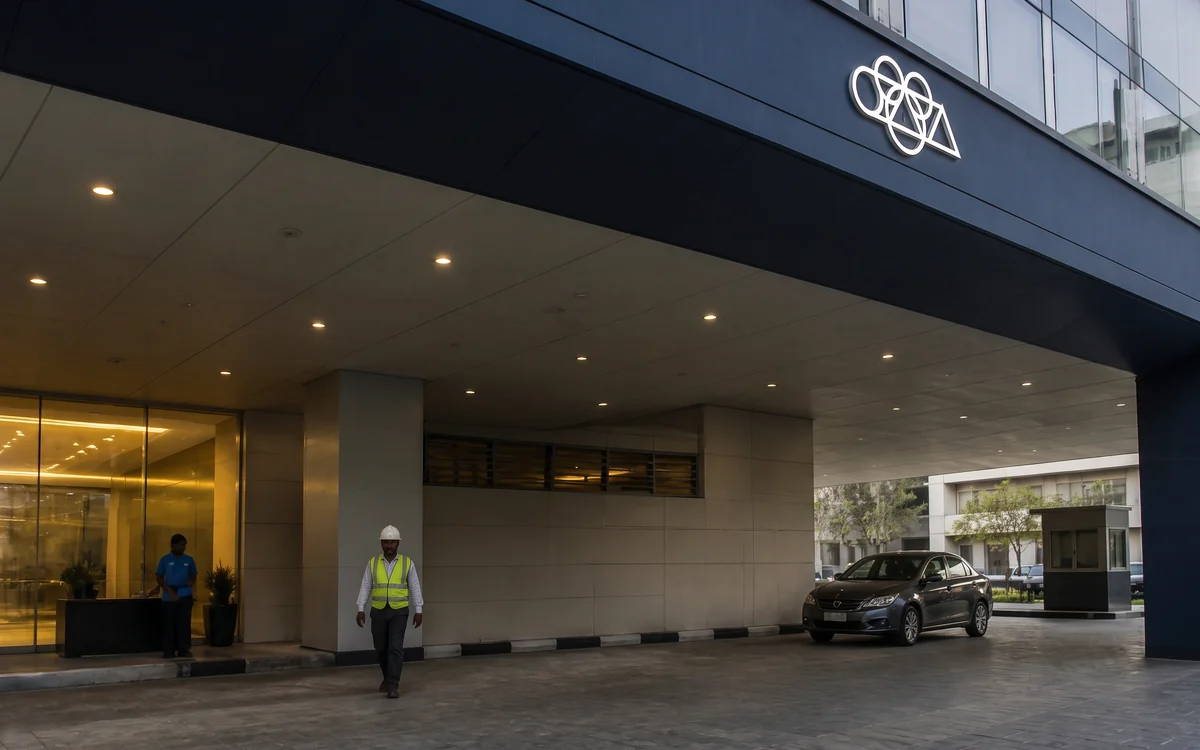
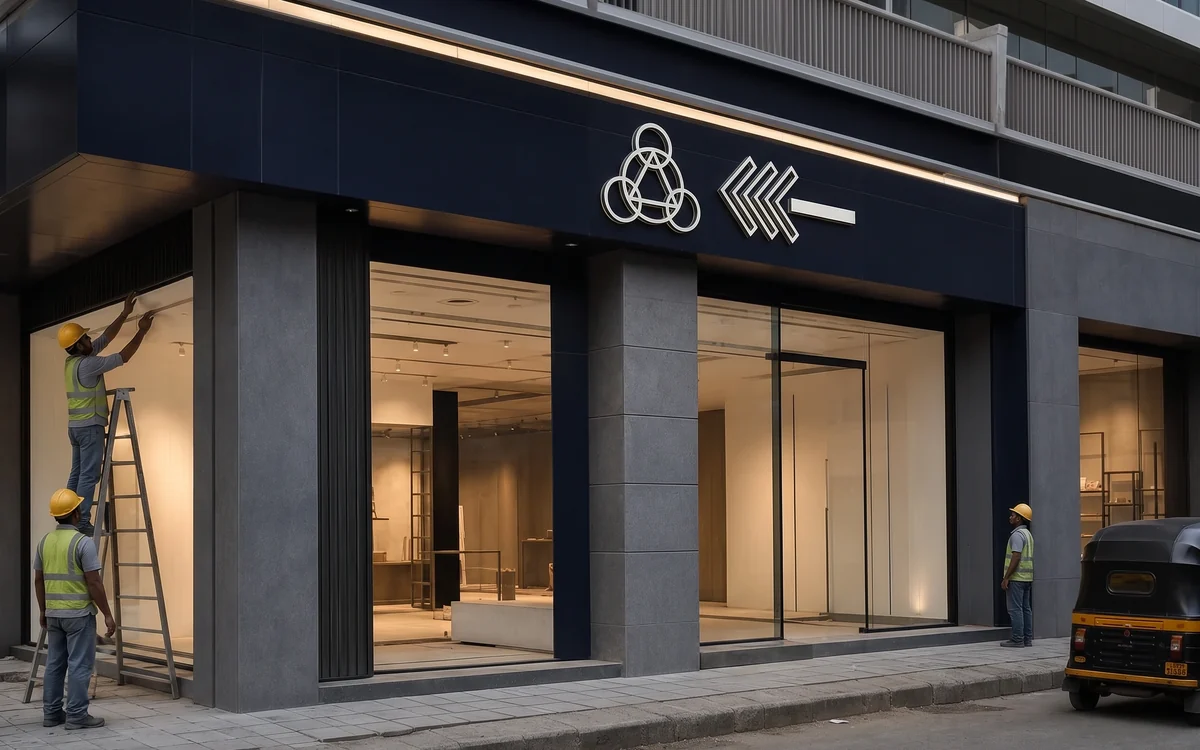
ACP fascia panels that double as the substrate for channel letters, halo-lit signage, raised lettering and box-up branding. We integrate the cladding fabrication with the signage fixings during fabrication — not after — so wiring routes, fixing points and visual joints align with the brand mark layout from the first panel onwards.
Column & Pillar Cladding
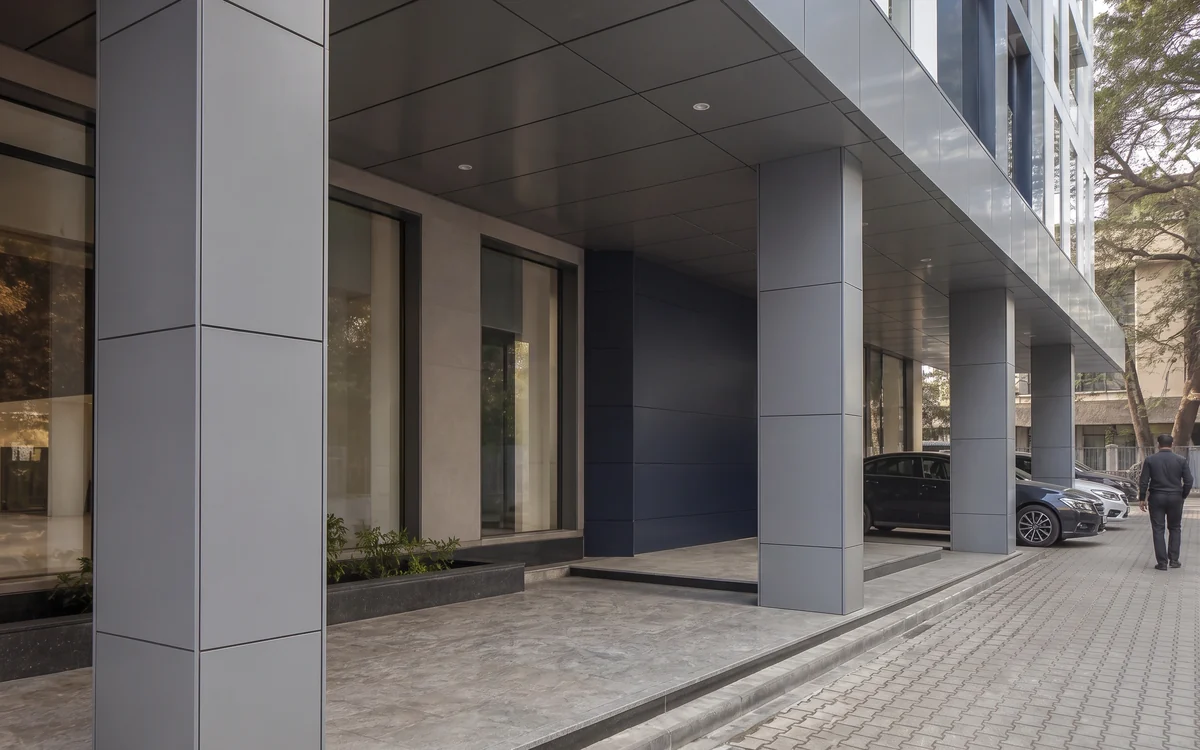
Structural column wraps for portico cladding, lobby columns, branch entrance pillars and parking-level signage columns. We fabricate panel sets to the column's exact perimeter, minimising joints and concealing the substructure behind a clean, continuous surface.
Soffit & Overhang Treatment
Underside cladding for canopies, overhangs, drive-throughs and branch entry porticos. Soffit work needs particular attention to substructure ventilation, condensation handling and load reversal — all handled in-house by our civil team.
Internal Feature Walls & Branding
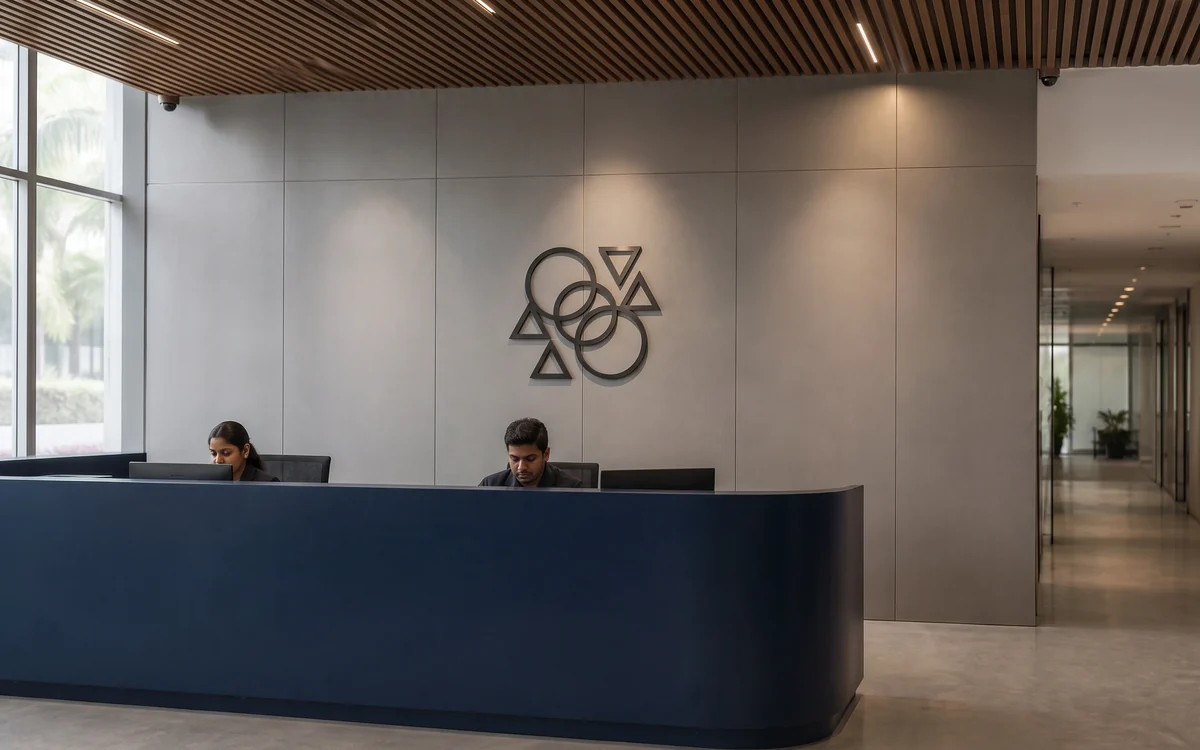
ACP feature walls for reception areas, brand lounges, conference room backdrops and showroom statement walls. Internal applications open up brushed, mirror and wooden-finish panel options that aren't always practical externally, and integrate cleanly with adjacent interior trades.
Branch & Showroom Fronts
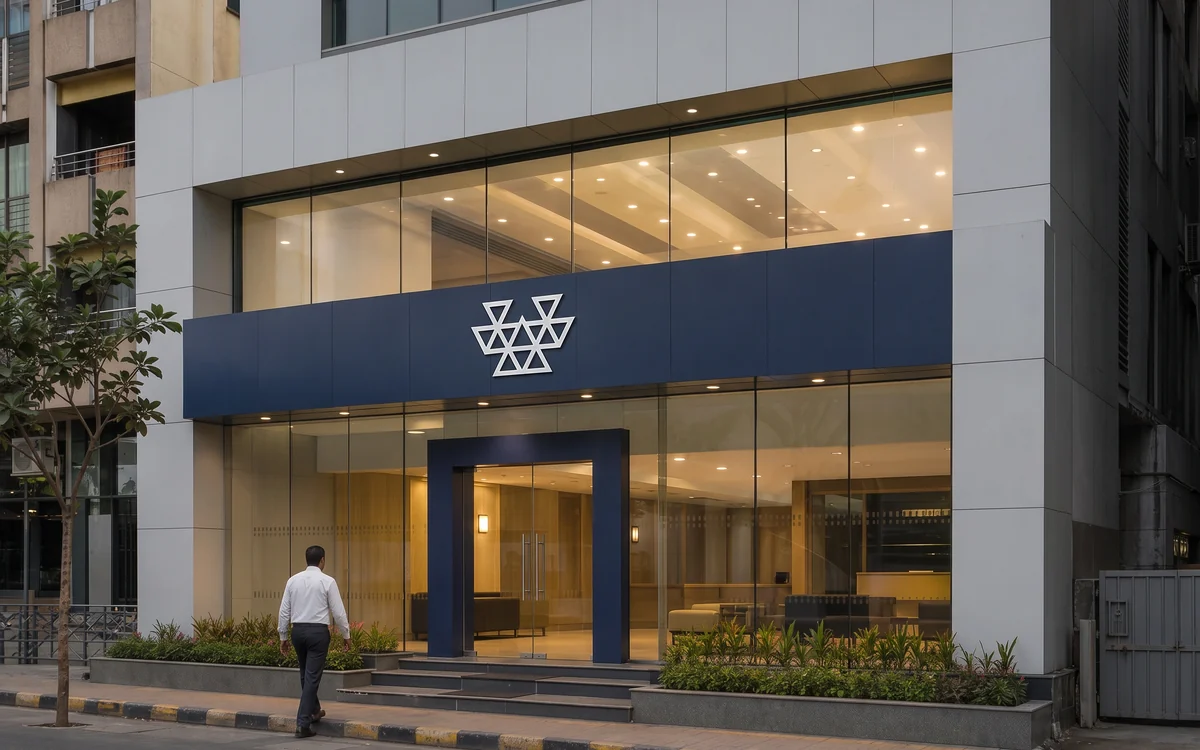
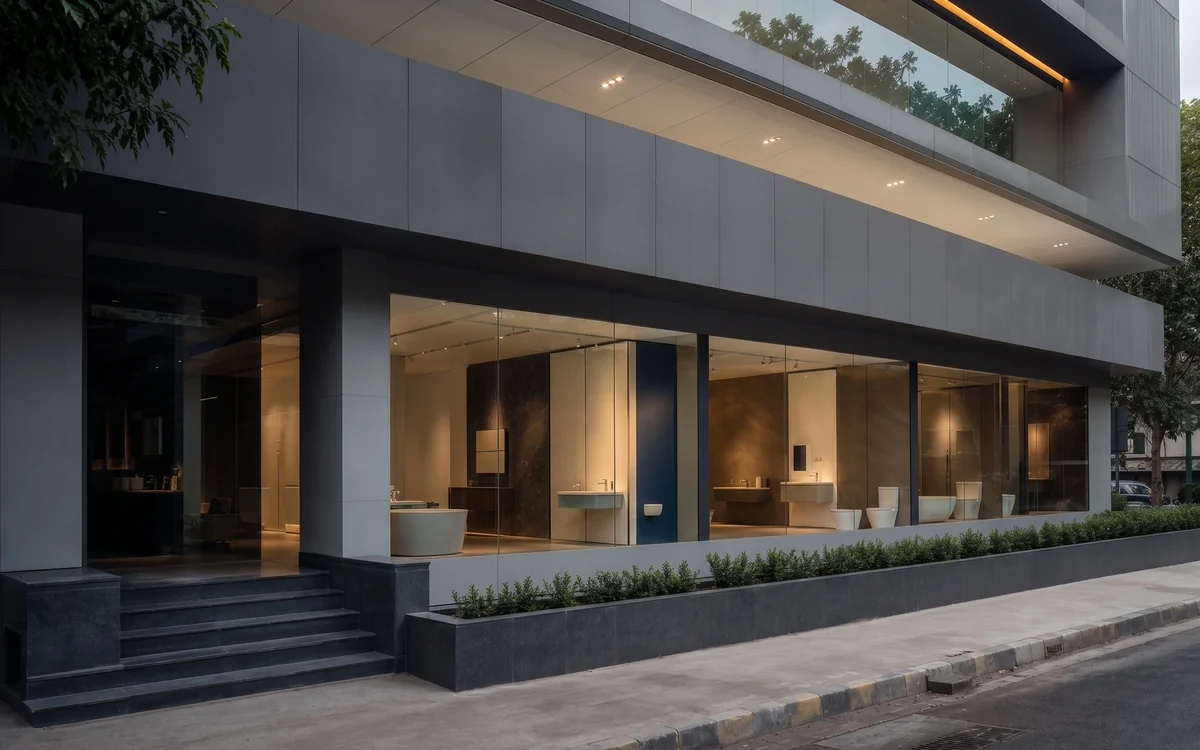
Full storefront and branch-front cladding integrating signage, panel jointing, lighting recesses and glazing interfaces. BFSI branches and retail showrooms are where ACP cladding has to coexist with the strictest brand-guideline enforcement — our team has executed this at scale for HSBC, Reliance Retail and Aditya Birla Retail.
What We Deliver
Every IBS ACP cladding engagement is end-to-end by default. The scope below is what we routinely execute on a standard enterprise project, in-house and under a single project manager. Components can be scoped down — for example, panel fabrication only, or installation only — if the client already has another vendor handling part of the chain. But the full-stack delivery is what most enterprise procurement teams ultimately ask for.
The IBS Advantage
Selecting a vendor for ACP cladding is rarely about who can supply the cheapest panel. It is almost always about who can hold accountability across a multi-trade scope, deliver to a hard deadline, and not push a coordination burden back onto the client. IBS's positioning is built around those exact pressures.
We Never Subcontract the Substructure
The single line that most defines how IBS is set up. The substructure work — galvanised framing, anchors, structural integration with the existing building — is the part of an ACP project where most quality failures and timeline slippages originate, because most cladding vendors job-work it out to a small civil contractor. IBS has its own civil and engineering team. The substructure is built in-house, supervised by our project manager, signed off by us. Accountability does not split.
End-to-End Single-Point Accountability
One vendor from the first site survey to the post-installation snag walk-through. No three-way coordination between a fabricator, a civil contractor and a signage vendor — and no finger-pointing when a panel separates from a substructure that was built by someone else. The client's project manager talks to IBS's project manager. That is the entire chain.
Pan-India Delivery at Mumbai Speed
A facade in Pune, Bengaluru, Hyderabad, Chennai, Ahmedabad or Delhi ships and installs on the same timeline as a project in Mumbai. We do not operate a Mumbai-only delivery model with an out-of-state surcharge. The cost and speed pattern is the same across India — which matters for enterprise clients rolling out branch networks or showroom programmes city by city.
BCAS Clearance for Aviation Work
IBS holds Bureau of Civil Aviation Security clearance, which qualifies the team to execute work inside airport terminals — both landside and airside. ACP cladding inside airport lounges, retail concessions, branded F&B outlets and ground-handling office buildings sits behind BCAS, and most cladding vendors simply cannot enter the secure perimeter. We are an approved vendor with Adani Airports.
Enterprise Track Record
The portfolio is named. Approved vendor with HSBC, Reliance Retail, Adani Airports, HDFC ERGO, Godrej Finance, EPSON and Duravit. Active client portfolio also includes Aditya Birla Retail, Accessorize, Sagility and Society Tea. The pattern is enterprise scale, brand-guideline-driven, deadline-sensitive — exactly the class of work where the in-house manufacturing and execution model proves itself.
How We Work
The process below is the standard sequence for an enterprise ACP cladding engagement. Smaller projects compress some steps; very large or multi-site rollouts add governance layers — steering committee reviews, milestone certifications, MIS reporting. The structure is the same.
Enquiry & Site Survey — within 48 hours
Once you enquire — through the website form, WhatsApp on +91 73042 76161 or a direct call to Vishal — we schedule a site visit at your project location within 48 hours. The site survey captures structural conditions, dimensions, existing substrate, access constraints, neighbouring trades and any drawings already in hand. The output is a written site assessment we share back with you.
Scope Alignment & BOQ Preparation
We work with your drawings and your architect or PMC to freeze the scope. A Bill of Quantities is prepared per your specification — panel brand, thickness, coating, finish, fire rating, substructure system, jointing approach and special items like curved sections, signage integration and lighting recesses. The BOQ is shared for your review and aligned before any commercials are quoted.
Commercial Proposal
IBS shares a detailed commercial proposal against the agreed BOQ. The proposal carries unit rates by line item with GST as a separate line. We do not publish standard rate cards — every project is scoped to its specification.
GFC Drawings & Sign-Off
On commercial agreement, IBS prepares Good For Construction drawings — facade elevations, panel set-out, substructure design, fixing schedule and detail sheets at critical junctions. These go to your architect, PMC or technical team for approval. We do not proceed to fabrication until GFC drawings are signed off.
Material Procurement & In-House Fabrication
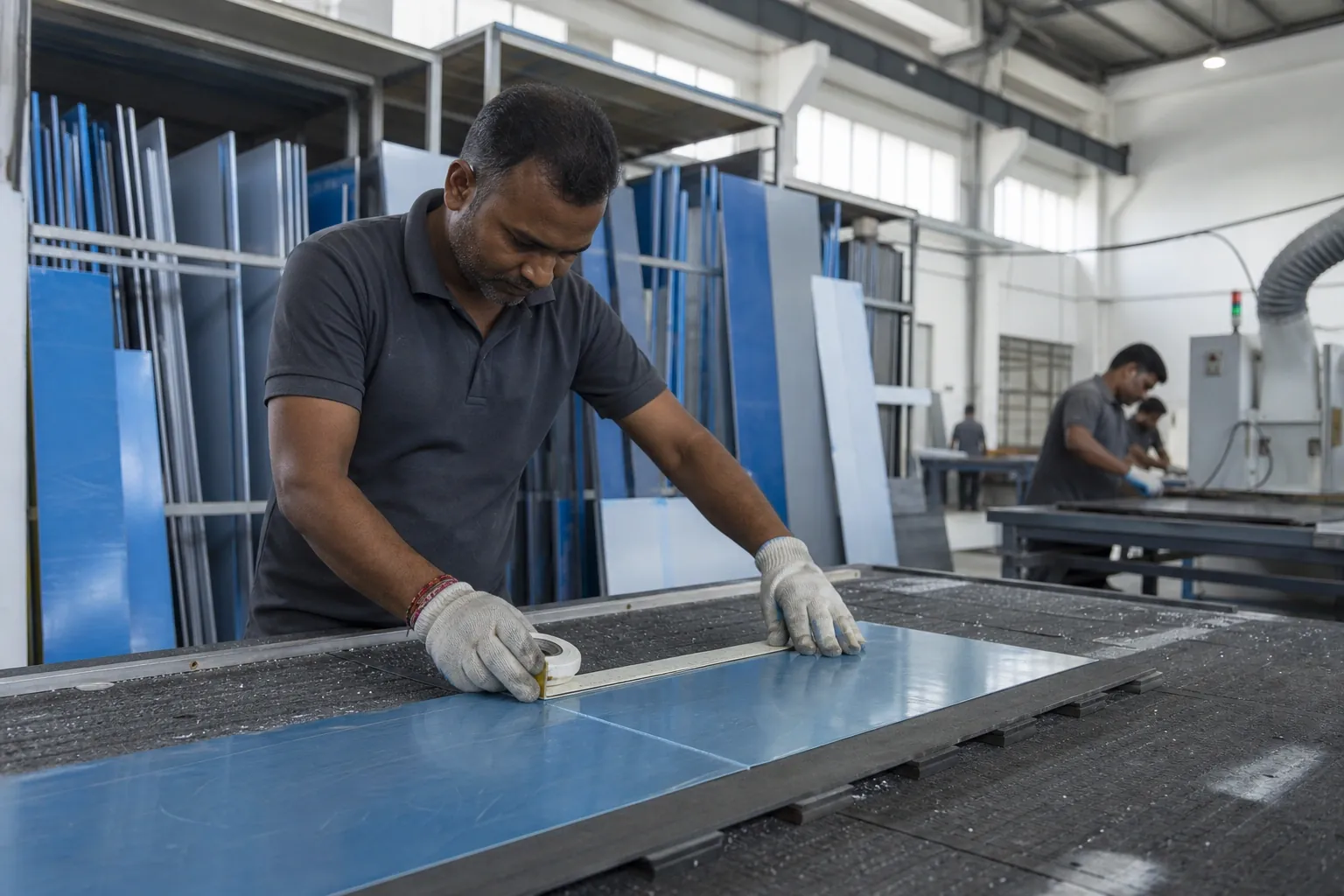
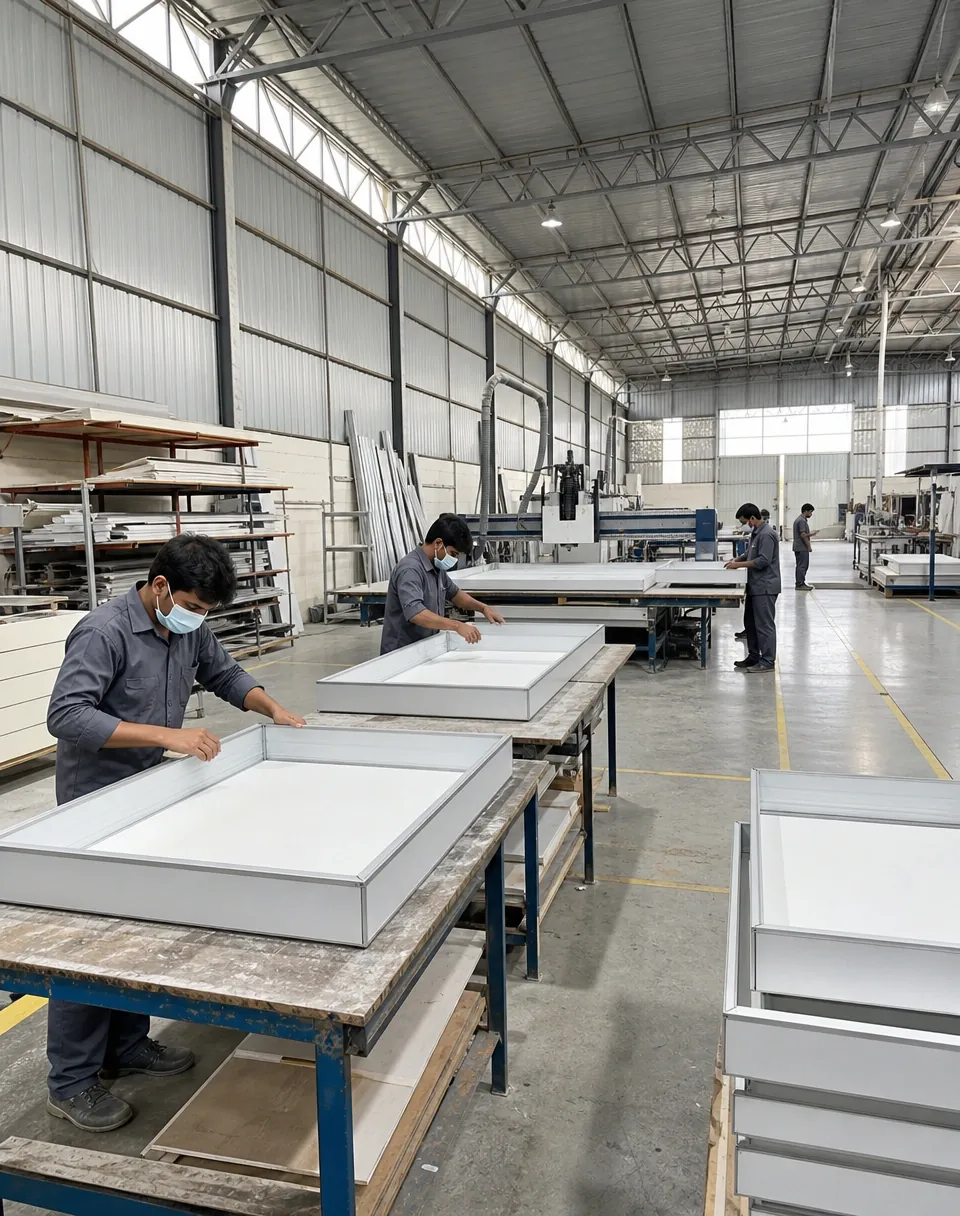
Materials are procured per the approved specification. Fabrication runs at IBS's own workshop — cutting, routing, edge folding, panel preparation. Quality checks happen at the bench before panels leave the workshop. Substructure fabrication runs in parallel where possible so site assembly is uninterrupted.
Installation, Sign-Off & Handover
The site team executes installation per the fabrication and substructure sequence, integrates with adjacent trades on site, and runs through the snag list with your team or PMC at completion. We hand over as-built drawings, material warranty certificates from the panel manufacturer, and IBS's own workmanship undertaking covering the defect liability period.
Who We Work With
ACP cladding is sector-agnostic as a material, but the way it is specified, executed and signed off differs significantly by industry. A BFSI branch facade is governed by brand guidelines that change quarterly. A hospital cladding job is governed by infection-control adjacencies. An airport project is governed by BCAS protocols. IBS has executed across the sector matrix below, and the differences inform how we scope each engagement.
Branch facades, ATM lobby cladding, regional office fronts. Approved vendor with HSBC, HDFC ERGO and Godrej Finance. The pattern is brand-guideline enforcement, multi-city rollout, and weekend or after-hours execution windows to avoid disrupting branch operations.
Reliance Retail, Aditya Birla Retail and Accessorize sit in this segment. Showroom fronts, storefront cladding, mall-shop fascia and column cladding. Visual continuity with the brand identity is the dominant requirement, often with tight handover deadlines tied to store opening dates.
Airport lounge cladding, retail concession fronts inside terminals, ground-handling office buildings. IBS is an approved vendor with Adani Airports and holds BCAS clearance — which is what makes this work possible. Most cladding vendors cannot enter the perimeter. Project sequencing has to work around live airport operations.
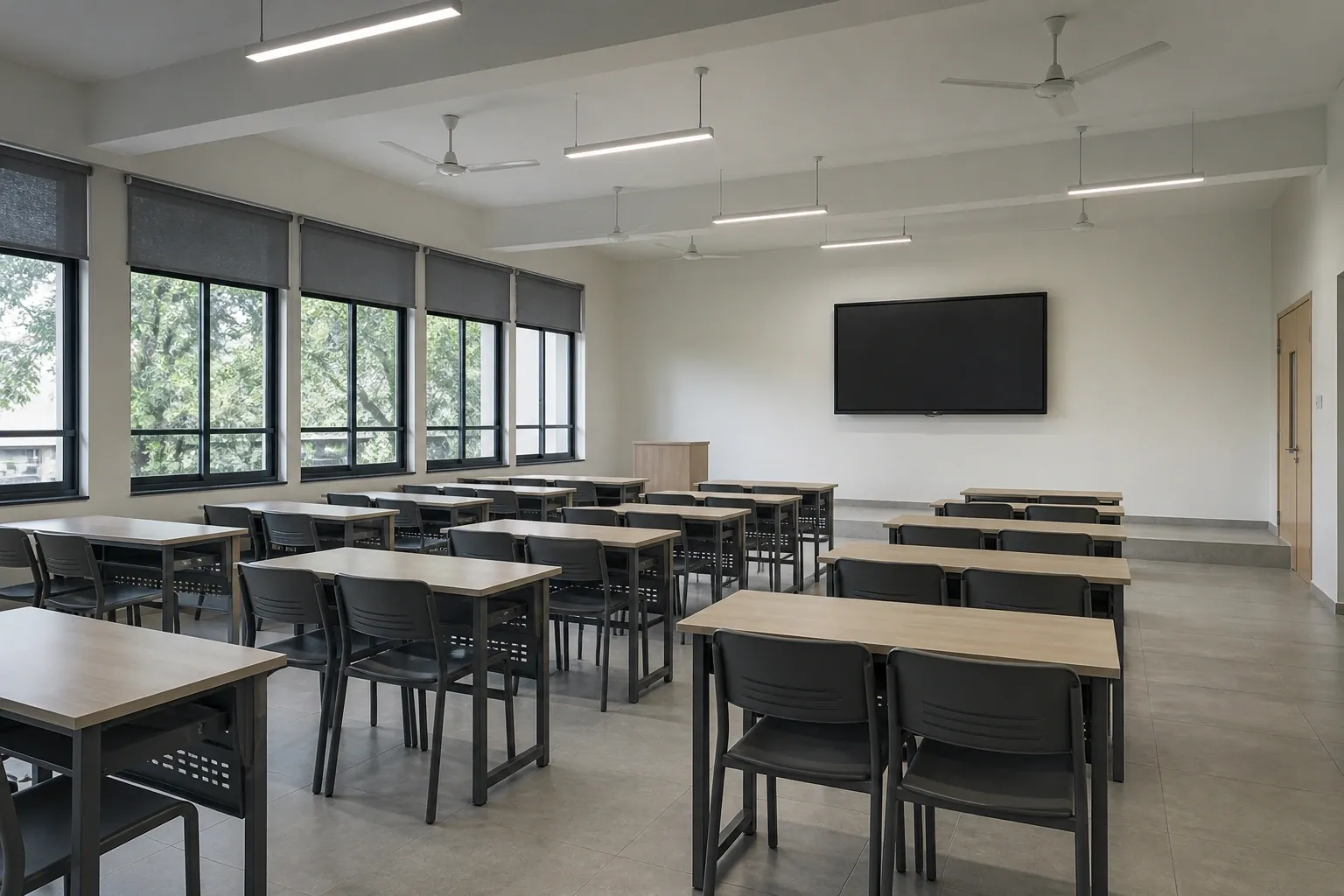
Academic buildings, administrative block facades, library and lecture-hall feature walls. Institutional projects come with longer approval cycles and committee-driven specifications — handled with the documentation rigour they require.
EPSON and Sagility have been delivered in this segment. Production facility facades, office block fronts inside industrial campuses, branded entry porticos. Industrial sites add safety protocols, hot-work permits and contractor inductions to the standard execution flow.
Society Tea outlets and adjacent F&B applications. Hospitality cladding integrates more decorative panel options — wooden-finish, brushed, mirror — and tends to span both exterior and interior surfaces.
Duravit, a global premium sanitaryware brand, is a named IBS client in this space. Showroom and display facility cladding where panel finish, lighting integration and product display continuity all converge.
Public-sector building facades, government office cladding, public service centre fronts. Tendering rigour, L1 dynamics and BOQ-driven scope are the operating norms — IBS works to those structures comfortably.
Commercial
IBS does not publish ACP cladding rates online. The reason is straightforward — every project is scoped against drawings, site conditions, panel specification, substructure design and finish requirements that are unique to it. Publishing a rate card would mean either oversimplifying that range into a number that misleads procurement, or hedging it with so many conditions that it stops being useful. Instead, we work to a clear engagement model.
A standard IBS commercial proposal for an ACP cladding project includes: the site survey and structural assessment, design coordination, GFC drawings, all material per client specification, in-house fabrication, in-house substructure execution, installation, on-site coordination with adjacent trades, snag rectification, post-installation defect liability cover, and handover with as-built drawings and material warranty certificates from the panel manufacturer.
GST is charged on a separate line per current Indian tax norms. TDS is deducted at source per applicability. Items that are not standard inclusions — extended maintenance contracts, panel replacement beyond the defect liability period, large-scale post-installation modifications — are scoped separately if and when requested.
For genuine enterprise enquiries — a real project, drawings in hand or in progress, and a defined timeline — the site survey and initial scoping work is conducted at no cost. We absorb that effort because the survey is the only way to scope a project accurately, and pre-commitment cost is a fair burden for the vendor to carry.
Send us your drawings to receive a detailed commercial proposal.
Frequently Asked Questions
The questions below are the ones IBS most often answers in procurement calls, architect coordination meetings and tender pre-bid sessions for ACP cladding work. If your specific question is not covered here, our team responds to enquiries within 24 hours on weekdays — connect@impulsebranding.co.in or +91 73042 76161.
IBS is a service company, not a material supplier. We deliver ACP cladding projects end-to-end — from site survey, design and BOQ preparation through material procurement, in-house fabrication, substructure execution, installation, snag rectification and handover. Supply-only or labour-only scopes are possible on request, but the full-stack delivery is our standard model.
All leading panel brands available in the Indian market. We do not push any single brand. The specific brand, thickness, coating grade, finish and fire rating is selected per your project's specification, and we procure to that spec.
Yes. IBS delivers ACP cladding projects pan-India — Mumbai, Pune, Delhi, Bengaluru, Hyderabad, Chennai, Ahmedabad, Kolkata, and across Tier 2 and Tier 3 cities. The delivery timeline and execution standard does not change with geography. We operate at the same pace and quality whether the project is in Mumbai or in a Tier 2 city.
Timelines depend on scope, drawings readiness, material lead times and site conditions. For a small project with drawings already in hand and standard panel specifications, execution can be wrapped inside a few weeks of PO. Larger or multi-phase facades typically run longer to accommodate substructure, fabrication and installation sequencing. A precise timeline is shared in the commercial proposal after the site survey.
No. GST is charged on a separate line in every IBS commercial proposal as per current Indian tax norms. The line-item rate quoted is exclusive of GST. TDS is deducted at source per applicability.
Material warranties on the panels themselves flow through from the panel manufacturer — the OEM warranty certificate is handed over at project sign-off. IBS itself stands behind the installation workmanship through the defect liability period: if any part of our installation fails, separates or does not perform as expected in the period immediately following handover, we rectify it at no additional cost. Routine post-installation maintenance and repairs beyond the defect liability window are available as a separate engagement and charged accordingly.
Yes. GFC drawings — facade elevations, panel set-out, substructure design, fixing schedules, detail sheets — are prepared in-house by IBS as part of standard project scope. Where the client's architect or structural consultant has prepared their own drawings, IBS works to those and supplements with shop drawings for fabrication and installation.
Yes — this is the standard mode of working on enterprise projects. IBS coordinates with the client's architect, interior designer or project management consultant throughout — drawings approval, site instructions, RA bills, snag walk-throughs. The vendor relationship sits with the client; IBS treats the architect or PMC as the delegated technical authority.
Material certificates — BIS conformance, fire rating, manufacturer test reports — flow through from the panel manufacturer and are handed over to the client at sign-off. Installation is executed per National Building Code (NBC) provisions and the manufacturer's recommended installation specifications. For fire-rated cladding projects, IBS works to the specified compliance grade and the corresponding installation standards.
Yes. IBS holds Bureau of Civil Aviation Security (BCAS) clearance and is an approved vendor with Adani Airports — both qualifying our team to work inside airport terminals airside and landside. ACP cladding for airport lounges, retail concessions, F&B outlets within terminals, duty-free zones and ground-handling office buildings has been delivered under this clearance.
BFSI (HSBC, HDFC ERGO, Godrej Finance), retail and showrooms (Reliance Retail, Aditya Birla Retail, Accessorize), aviation (Adani Airports), manufacturing and industrial (EPSON, Sagility), hospitality and F&B (Society Tea), healthcare and sanitaryware showrooms (Duravit), educational institutions, and government and public-sector buildings.
IBS uses galvanised iron box sections, mild steel sections or aluminium T-grid framing depending on facade engineering — the choice depends on facade height, wind loading, thermal expansion behaviour, panel weight and corrosion exposure. The substructure is built by IBS's own civil and engineering team, never subcontracted, because subcontracted substructure is where most cladding failures originate. Keeping the work in-house means accountability stays with us when anything needs to be revisited.
Yes. Curved facades, faceted surfaces, sloped column wraps, non-rectangular panel layouts and complex corner returns are all within scope. The fabrication tolerance and substructure detailing for non-orthogonal work is more demanding, and we plan it with appropriate extra time in the GFC drawings stage.
Yes. Where the project specification calls for fire-rated panels — FR grade per IS norms or A2 grade per EN 13501-1 — IBS procures the specified material, executes installation to the manufacturer's fire-rating-preserving guidelines, and hands over the corresponding material certificates at sign-off. Fire-rated installations are more common on hospital, hotel, high-rise office and airport projects.
Jointing approach is selected per design intent and exposure conditions. Common options include silicone-sealed joints, dry rubber gasket joints, mechanical clip systems, structural-glazing-style sealant joints and rivet-fixed flush joints. The choice is made during GFC drawing development with the architect, balancing aesthetic intent, weather sealing requirements and serviceability.
Thermal expansion is accommodated in the substructure design and the joint spacing — both are calculated to the panel manufacturer's expansion coefficient and the local climate band. For rainscreen detailing on tall facades, we design the substructure cavity to allow drainage and pressure equalisation per NBC guidance and the panel manufacturer's recommendations.
Yes — this is one of the reasons clients pick IBS over a pure-play cladding vendor. We fabricate panel sets that pre-incorporate signage fixings, wiring routes for halo-lit and channel letter signage, recesses for LED strip lighting and openings for raised lettering. Signage and ACP cladding are part of the same project rather than two vendors arguing on site.
Yes. IBS undertakes replacement and rework on existing ACP cladding — whether the original work was executed by IBS or by another vendor. This is treated as a separate engagement (not under any prior warranty obligation), scoped against a site survey, and quoted commercially per the rework scope.
Yes. As-built drawings showing the executed panel layout, substructure design, fixing schedule and any site-stage modifications from the GFC drawings are handed over at project sign-off, along with material warranty certificates from the panel manufacturer and IBS's own workmanship undertaking covering the defect liability period.
Featured Work
Selected projects from the IBS portfolio where ACP cladding was core scope. More projects added as case study pages are authored on /case-studies/.
BCAS-cleared end-to-end execution including ACP cladding within the airport terminal duty-free zone — civil works, ACP cladding, signage and finishing integrated under one project manager
View case study →Storefront cladding for a Reliance Retail store in Ahmedabad — brand-guideline-driven execution
View case study →Impulse Branding Solutions is a Mumbai-headquartered, vertically integrated commercial branding and fit-out execution company with over fifteen years of operating history. We deliver across two service lines under one roof: print branding and signage — including ACP cladding, LED sign boards, glow signs, channel letters, vehicle wraps and exhibition fabrication — and commercial interior fit-outs covering civil, MEP, false ceiling, joinery and turnkey contracting.
Our in-house manufacturing facility, in-house civil and engineering team and in-house furniture factory near Vasai East mean every project, from a single signage installation to a multi-Crore fit-out, runs through one team with single-point accountability. Approved vendor with Adani Airports, HSBC, Reliance Retail, HDFC ERGO, Godrej Finance, EPSON and Duravit. BCAS-cleared for airport work. Pan-India delivery at a single execution pace.
Read more about IBS →Explore More
ACP cladding rarely ships alone on enterprise projects. The same scope usually integrates signage, fascia branding and interior treatments. The related IBS services below are the most commonly bundled.
Send us your drawings, scope and target timeline. We'll schedule a site survey at your project location within 48 hours and respond with a detailed commercial proposal aligned to your BOQ. From civil works to signage — all under one roof, and across India at one speed.